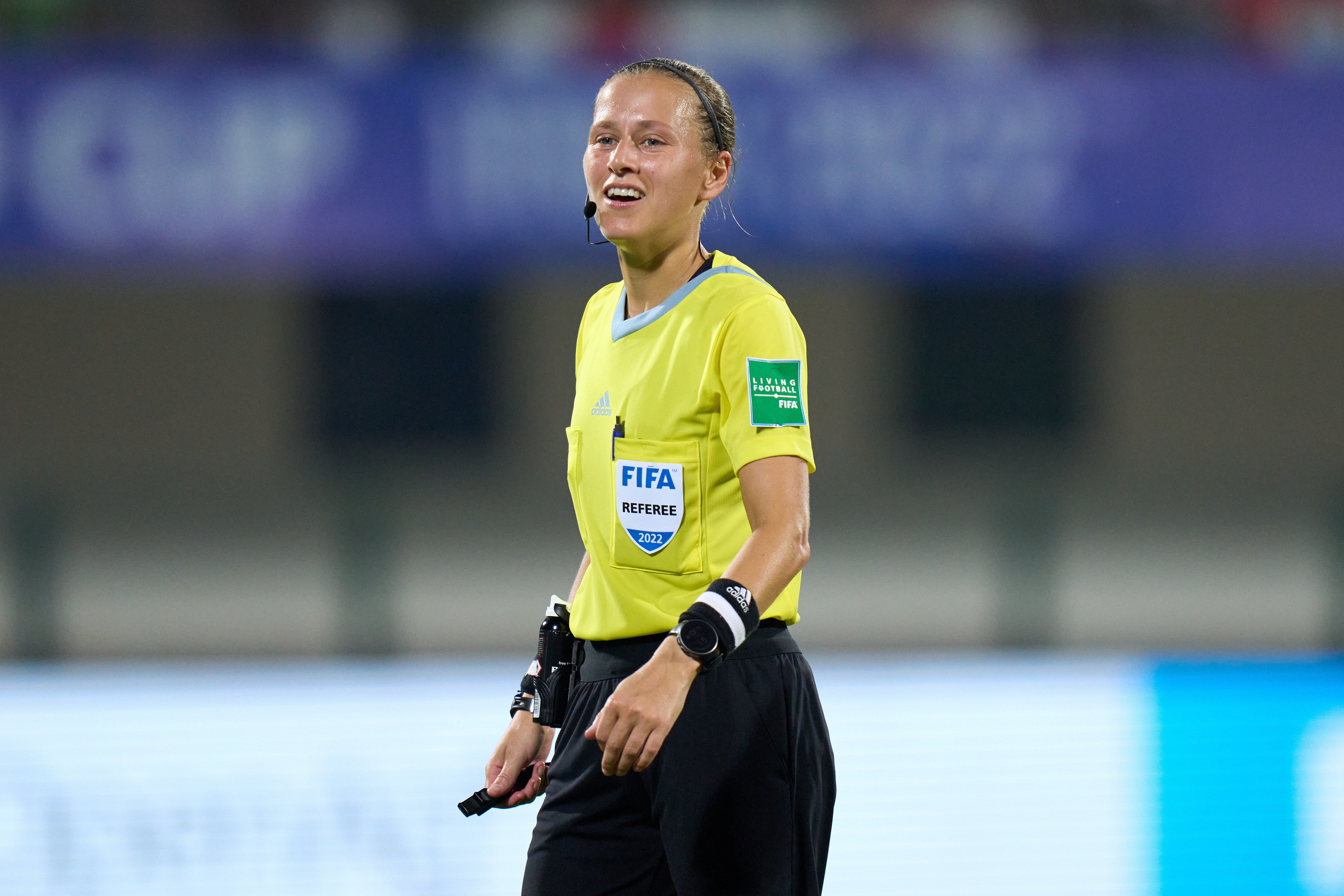
- Congratulations on the new role as Head of Refereeing for the national competitions in the amateur football department. What does your new role entail?
- It’s a new role that has been created by the KNVB. In this position, as you mentioned, I am the Head of Referees in the top three leagues of the amateur level, namely the second, third, and fourth divisions. Within these three groups, we have a total of 250 officials, including referees, assistant referees, instructors, and observers. My responsibilities encompass various areas. Firstly, I am in charge of making appointments for the officials, ensuring that they are assigned to the appropriate matches. Additionally, I oversee the development of the referees, which includes organising courses and managing the curriculum within these courses. Furthermore, I serve as the primary point of contact for all individuals involved, providing assistance, information, and support whenever they require it. Naturally, I don’t handle these tasks alone. I work closely with a team of staff members who contribute to our smooth operations. My role primarily revolves around ensuring that everything runs efficiently. This includes ensuring that the officials have access to appropriate training programs and that everyone is progressing and developing in the right manner. The shortage of referees is a significant issue in amateur football currently. We are facing a challenge with the decreasing number of qualified referees available to officiate in all amateur games. This shortage also poses a problem for the future, as we need referees who can eventually progress into the professional game. The Covid-19 pandemic has exacerbated this problem, leading to the loss of many referees who did not return to refereeing. Additionally, we have a growing number of older referees who are approaching retirement age. Consequently, we must find ways to make refereeing more appealing and engaging for younger individuals to encourage them to take up this role. We are actively exploring various options to increase recruitment and retention levels. This issue is not unique to the Netherlands; it is a global problem that requires attention and action. We recognize the need to address it proactively and implement strategies to attract and retain referees, ensuring a sustainable supply for the future. While increasing financial compensation may seem like an obvious solution, it’s not always feasible due to legal limitations and practical considerations. In the Netherlands, there are legal constraints on the amount that can be paid to individuals in voluntary roles, and the KNVB is already paying almost at the upper limit. Transitioning all amateur referees into formal employees of the KNVB by issuing contracts would present significant challenges and impracticalities. Therefore, alternative strategies need to be explored to attract new referees that go beyond monetary incentives. Finding perks or benefits that appeal to potential referees is crucial. This could include creating a supportive and inclusive community for referees, offering opportunities for personal and professional development, providing mentorship programs, facilitating networking opportunities, recognising, and appreciating their contributions through awards or ceremonies. Additionally, implementing initiatives to enhance the referee experience, such as improved training facilities, access to resources and technology, and fair and respectful treatment from players, coaches, and spectators, can also contribute to making refereeing a more attractive and rewarding pursuit. By focusing on a comprehensive approach that goes beyond financial considerations, we can work towards increasing the appeal of refereeing and addressing the shortage of referees in the long term. Addressing abuse towards referees is of utmost importance. Even a single case of abuse is unacceptable, and it’s crucial to ensure that referees receive the support and protection they deserve. It’s commendable that in the Netherlands, referee departments in every district are actively reaching out to referees after incidents of abuse to offer support and assistance. Providing a listening ear, guidance, and helping with report filing demonstrates a commitment to the well-being of referees and shows that they are valued within the community. Moreover, offering mental health support is vital, as referees may experience emotional and psychological impacts following abusive incidents. Increasing the severity of punishments for players who abuse referees sends a strong message that such behaviour will not be tolerated. By imposing heavy suspensions, it reinforces the notion that referees must be respected and protected. This approach not only supports referees but also serves as a deterrent, creating a safer environment for all participants in the game. By implementing these initiatives, the goal is to enhance support for referees, foster a sense of security and well-being, and convey a clear message to players and coaches that referee abuse is unacceptable. Together, these efforts contribute to creating a culture of respect and appreciation for referees within the football community. I believe society itself has undergone a transformation. People are constantly expressing their thoughts and opinions without hesitation, and the level of respect appears to have diminished compared to the past. As a result, referees must possess great resilience and strength. For some individuals, this can pose a significant challenge, leading them to say, “No, sorry, this is not for me.” To address this issue, we need to implement more comprehensive advertising strategies. However, it shouldn’t be limited to professional referees alone; clubs must also actively participate. They should encourage referees by saying, “Come on, guys, we need you! There is no game without you.” Clubs can play a crucial role in recruiting and retaining referees through their conduct and attitude towards them. Another initiative we are currently working on involves assigning a referee coordinator to each amateur club. This coordinator’s role would involve welcoming referees upon their arrival, providing them with food and drinks, and overall making them feel welcome at the club. Moreover, in case any incidents occur during the game, the coordinator can ensure the referee safely returns to their dressing room while offering support and protection. Although not every amateur club has filled this position yet, we strongly urge them to do so. Having a referee coordinator can significantly enhance the support referees receive on match days and contribute to their retention within the field.

- The KNVB have the new initiative that has come in this last month or so where games are now stopped, and players taken off the pitch if there are problems. Is that starting to have an effect?
- After the period of empty stadiums due to the coronavirus pandemic, something changed when the supporters returned. Unfortunately, some fans have become even more unruly than before. While the act of throwing objects has been prevalent in football for the past century, the current situation has escalated to a new level. Supporters are now throwing anything they can get their hands on, including lighters, cups of beer, and even fireworks. This behaviour has become a significant issue that needs to be addressed. Efforts have been made to appeal to the fans and request them to stop such actions, but their behaviour remains unchanged. Disturbingly, there have been recent incidents where players celebrating goals have been struck by supporters, and in one instance, a supporter ran onto the pitch and kicked a goalkeeper. The level of violence has increased, and this is something that needs to be urgently addressed. The tipping point came during the Cup semi-final between Feyenoord and Ajax on April 4. Davy Klaassen was hit with a lighter, resulting in a severe head wound. In response to this incident, the Royal Dutch Football Association (KNVB) has implemented a new rule: if any object is thrown onto the pitch, the game will be immediately stopped, and the players will be taken off the field. It doesn’t matter if it’s just one cup or one lighter; if it lands within the white lines of the pitch, the game will be temporarily halted. Moreover, if any participant in the game, including players, match officials, or coaches, is hit by an object, the game will be abandoned altogether. The strict measures are necessary to ensure the safety and well-being of everyone involved in the game. These new rules are already starting to have an impact, as supporters are generally making an effort to behave better. However, incidents like the one experienced last night, where a game was stopped due to a cup of beer being thrown onto the pitch, are still occurring. In fact, there were three other games on the same evening that had to be temporarily halted due to similar incidents. This widespread problem highlights the need for immediate action. Discussions are ongoing regarding the long-term implementation of these measures and the potential additional penalties that clubs may face if their fans continue to misbehave. However, these considerations are for the future and will require further deliberation.

- What skills do you think are important to be a good referee?
- Having strong communication skills is a crucial aspect of effectively managing a game. It is a skill that develops with experience and involves the ability to communicate with players and coaches, explaining your actions and decisions in a respectful manner. This skill greatly aids referees in maintaining control over the game. Another important attribute is strong leadership. As a referee, you need to be firm, when necessary, while maintaining a polite demeanour. Confidence plays a significant role in this regard. It is vital to be confident in your decisions, even if you might have some doubts. Demonstrating confidence helps establish authority and command respect from those involved in the game. A solid understanding of the Laws of the Game and physical fitness are fundamental requirements for referees. Being knowledgeable about the rules and maintaining good physical condition ensures that you can effectively officiate matches. Furthermore, honesty and openness in your interactions with players are crucial. Avoid arrogance and remain humble in your approach. Consistency in decision-making is essential, treating both teams equally. If you make a particular decision for one team, you must apply the same standard to the other team in similar situations. Displaying impartiality and fairness garners respect from the players and contributes to a balanced playing environment. By successfully embodying these qualities, you can establish yourself as a respected referee. Remember, the journey to becoming a top referee is an ongoing process that requires continuous improvement and refinement of these skills.
- What is your pre-match preparation, physically and mentally, as well as in terms of team knowledge preparation? Is this a training regime you will be passing onto your referees?
- Indeed, preparing for domestic and international games as a referee can have some differences. In domestic matches, you have the advantage of being familiar with the teams, players, league rankings, and the significance of the game. This familiarity makes the preparation process easier. On the other hand, international matches, such as those in the Champions League, present unique challenges. As a referee, you may not be familiar with all the players and teams involved. To overcome this, UEFA provides a match analyst who meets online with the referees a day before the game. The analyst shares valuable insights such as team tactics, formations, set-piece strategies, and key player information. These details help you adjust your positioning on the field and be well-prepared for the match. Additionally, statistical data is provided to further enhance your knowledge and preparation. In terms of personal preparation, your routine on the day of the game is focused on rest and relaxation. You prioritise getting ample sleep and taking a warm bath, which helps you unwind and rejuvenate. Listening to relaxing music and watching a series or movie on Netflix, especially when away internationally, helps create a calm and peaceful atmosphere. In the dressing room, you prefer to have music playing to prevent silence, which can lead to overthinking and nervousness. The music serves to relax and maintain focus. By incorporating these elements into your preparation routine, both in terms of match analysis and personal relaxation, you create an environment that allows you to perform at your best as a referee, whether in domestic or international games.

- You started to attend games as a mentor/coach. What does that involve, pre, during and post-match?
- In professional refereeing, it is common for referees to have a coach, and I have taken on the role of coaching two young referees. Throughout the season, I have the opportunity to observe each of these referees six times: three times before the winter break and three times after. We maintain regular contact on a weekly basis, even when I am not physically present at their games. I make an effort to watch their games or at least review summaries of them. When I communicate with the referees I coach, my primary focus is on providing support and advice. I aim to be a listening ear for them, offering assistance with any challenges they may be facing in their personal lives. As a coach, I draw upon my own experiences and the lessons I’ve learned along my refereeing journey. By sharing my insights and helping them avoid making similar mistakes, I hope to contribute to their growth and development. Our collective goal is to achieve good refereeing, and I find it fulfilling to have the opportunity to assist these young referees. By working together and supporting one another, we can collectively reach our objectives. I engage in various forms of communication, such as watching their games, writing coach reports, participating in a WhatsApp group, and having telephone conversations. The key is to maintain close contact and provide continuous guidance to help them progress in their refereeing careers.
- Will you be implementing a dedicated Mental Health program for your referees?
- I completely agree that referee mental health deserves greater attention and support. It is unfortunate that there is currently no mental health program in place at the KNVB (Royal Dutch Football Association). In the past, mental health was often a taboo subject, but fortunately, it is now gaining more recognition and discussion within the sporting community. The availability of mental health coaches has increased, which is a positive development. While professional referees have coaches who can provide support and guidance, mental health and well-being should be integrated into the overall training program. It would be beneficial to include mental preparation and support as essential components of referee training. This is particularly important for amateur referees who may face abusive incidents, challenging games, or negative feedback from observers. These experiences can potentially discourage individuals from continuing in refereeing. By offering mental support and guidance, referees can be better equipped to handle these situations, build resilience, and maintain their passion for refereeing. Integrating mental preparation and support into the training program would involve providing appropriate advice, strategies, and resources to referees to enhance their mental well-being. It may involve offering talks or training sessions on mental preparation and resilience. Supporting referees in developing mental strength can have a positive impact on their performance and overall satisfaction in their roles. Ultimately, it is crucial for the Federation to recognise the importance of referee mental health and provide the necessary support. Implementing a comprehensive mental health program for referees would demonstrate a commitment to their well-being, ensuring that they are supported and able to cope with the challenges they may face.

- What will the work with coaches and journalists involve?
- We meet once a year at the start of the season. The meeting takes place at the KNVB, and it is attended by all the top journalists from the papers and the TV commentators. They come to Zeist along with the referees and the Head of Referees at the KNVB, Dick van Egmond. During the meeting, we explain the basics of the Laws of the Game using video examples. Some of the topics we cover include: What constitutes a red card? What constitutes a yellow card? What is considered stopping a promising attack? What is denying an obvious goal-scoring opportunity? We also explain offside, the role of the VAR, and our goal is to improve understanding of our decisions. We hope that by doing this, when the journalists spread their opinions, they will accurately represent the Laws of the Game. When they misinterpret the laws and spread misinformation, fans tend to believe them, which leads to backlash against referees. As you may know, the Netherlands is one of the few, if not the only country, where referees have always come out after a game to explain their decisions. This practice was aimed at being open and transparent. However, we have now discontinued this approach. We will only appear in front of the camera to explain a law change or a specific point of law. We will no longer discuss individual decisions or admit to mistakes such as missing a penalty or a red card, for example. It’s not that we don’t want to provide explanations, but this practice was being exploited to ridicule and mock us. With the introduction of VAR, comments such as “was VAR sleeping?” or similar remarks were made when VAR did not intervene in a situation. These comments showed a lack of interest in the VAR protocol or whether the situation allowed for VAR intervention. It was unproductive and did not add any value. We also wanted to align ourselves with the guidelines set by UEFA and FIFA.
- What kind of referee evaluations are you using?
- We have only one assessor who assesses the entire officiating team. At the professional level, we also have technical staff who watch the game and take notes, but it is ultimately the assessor who determines the final evaluation. In UEFA, there is an observer present at the stadium, and there is also a TV spotter who provides a separate report. UEFA compares the two assessments, and if they are similar or in agreement, they accept it. However, if there is a significant difference between the marks, UEFA will further investigate the matter. The observer present at the stadium has the advantage of experiencing the game first-hand. They can feel the atmosphere, gauge the intensity of the match, and assess whether a yellow card, whether given or not given, is appropriate considering the overall context. On the other hand, the TV spotter focuses solely on the technical aspects of the game. They may identify instances they consider as missed yellow card offences, but they may not take into account how issuing such a card would impact the game’s intensity, unlike the stadium observer. Additionally, the observer at the stadium has a broader field of vision since the referee is not always in view on the TV screen. They can observe situations where the referee has quiet conversations with players to explain decisions or diffuse tensions, which the TV spotter may not be able to see. The combination of assessments from the observer and the TV spotter allows for a more comprehensive evaluation of the officiating team’s performance, taking into account both the technical aspects and the on-field dynamics. In the Netherlands, the observer is equipped with an earpiece for the communication system. Although they cannot speak to the officials, they can listen to the communication happening between them. This allows the observer to hear how the referee interacts with the players and collaborates with their team. Sometimes an assistant referee may have a better view of an incident and assist the referee in making a decision. The observer is aware of such instances. In the past, referees may have taken credit for a good call that was actually made by an assistant referee, or they may have blamed an assistant for a wrong decision that was actually the referee’s responsibility. With the earpiece system, this type of misattribution is eliminated, leading to a fairer assessment. Efforts are being made to implement this system at the amateur level as well. This would enable a referee coach or the club referee coordinator to listen in and provide feedback. Another possibility is recording the communication during the game, making it available for review and serving as a developmental tool to enhance referees’ communication skills. This is one of the ways we are working to improve the amateur level of refereeing by providing referees with the necessary tools, such as communication equipment and beep flags, to assist them during matches. Regarding the involvement of clubs in the assessment process, we are discussing a new system where clubs would have the opportunity to contribute their evaluations. However, this system is not currently in place. Finding a solution to ensure that club assessments are conducted honestly and not solely based on emotions or the outcome of the game, such as a penalty decision going against them, is a challenge that we are actively exploring.

- Is there anything else refereeing-related that you would like to discuss?
- Social media can be a powerful tool for referees, especially young and amateur referees, to promote and showcase their work. It provides a platform to share inspiring videos and stories that can encourage others to take up refereeing. Utilising social media in this way is indeed a positive development. In addition, it’s important for referees to remember that we are all part of the same family and should support one another. Instead of criticising each other or professional referees who have officiated our teams, it’s crucial to acknowledge and understand the challenges that come with being a referee. Let’s foster a positive and humble environment where we lift each other up, offer assistance, and give compliments. Envy and negativity don’t contribute to our progress; it is through teamwork and unity that we can advance. Therefore, it is advisable to use social media as a platform for sharing uplifting content, including positive posts about our fellow referees. This way, social media can become a supportive network for referees to connect and encourage each other.
- What else are you up to?
- I am VAR today, so after this interview, I will prepare myself for that. It’s Volendam vs Sparta Rotterdam, and there’s a young referee, Jannick Van der Laan. This is an important game because Volendam is fighting to avoid dropping into the relegation zone. It’s nice that, as an experienced VAR, I can help young referees in games. Besides my work as a referee and my involvement with the KNVB, I enjoy watching movies and Netflix in my free time. I also value spending time with my family and doing enjoyable activities with my friends. Occasionally, I like to play games on the PlayStation. Additionally, it is important to dedicate time to my relationship. As a referee, I am often traveling and occupied with work, but it is crucial to give attention to my relationship as well. Off the field, I need to find a way to recharge my batteries because I must refresh my mind and be ready for the next game. Referees don’t have much downtime, so it’s essential to use it wisely.