UEFA Europa League 2019/2020 – Round of 16 (Second Leg, I)

5 August 2020

FC Copenhagen – Istanbul Başakşehir
Referee: Daniele Orsato (ITA, photo)
Assistant Referee 1: Lorenzo Manganelli (ITA)
Assistant Referee 2: Alessandro Giallatini (ITA)
Fourth Official: Davide Massa (ITA)
VAR: Massimiliano Irrati (ITA)
AVAR: Marco Guida (ITA)
Referee Observer: Marinus Koopman (NED)

Shakhtar Donetsk – VfL Wolfsburg
Referee: Ivan Kružliak (SVK)
Assistant Referee 1: Branislav Hancko (SVK)
Assistant Referee 2: Peter Bednar (SVK)
Fourth Official: Ivan Bebek (CRO)
VAR: Andris Treimanis (LVA)
AVAR: Sandro Schaerer (SUI)
Referee Observer: Stefan Messner (AUT)

Manchester United – LASK
Referee: Anastasios Sidiropoulos (GRE)
Assistant Referee 1: Polychronis Kostaras (GRE)
Assistant Referee 2: Lazaros Dimitriadis (GRE)
Fourth Official: Anastasios Papapetrou (GRE)
VAR: Paolo Valeri (ITA)
AVAR: Maurizio Mariani (ITA)
Referee Observer: Alfredo Trentalange (ITA)

Internazionale Milano – Getafe CF
Referee: Anthony Taylor (ENG)
Assistant Referee 1: Gary Beswick (ENG)
Assistant Referee 2: Adam Nunn (ENG)
Fourth Official: Christopher Kavanagh (ENG)
VAR: Stuart Attwell (ENG)
AVAR: Paul Tierney (ENG)
Referee Observer: Peter Sippel (GER)

UEFA Youth League 2019/2020 – Quarter-Finals

18-19 August 2020 

GNK Dinamo – SL Benfica 
Referee: Horatiu Fesnic (ROU, photo)
Assistant Referee 1: Alexandru Cerei (ROU)
Assistant Referee 2: Valentin Avram (ROU)
Fourth Official: Marius Avram (ROU)
Referee Observer: Frank De Bleeckere (BEL)

FC Midtjylland – AFC Ajax
Referee: Anastasios Papapetrou (GRE)
Assistant Referee 1: Iordanis Aptosoglou (GRE)
Assistant Referee 2: Tryfon Petropoulos (GRE)
Fourth Official: Athanasios Tzilos (GRE)
Referee Observer: Terje Hauge (NOR)

Red Bull Salzburg – Olympique Lyonnais
Referee: Donatas Rumsas (LTU)
Assistant Referee 1: Aleksandr Radius (LTU)
Assistant Referee 2: Dovydas Suziedėlis (LTU)
Fourth Official: Manfredas Lukjancukas (LTU)
Referee Observer: Frank De Bleeckere (BEL)

Inter Milano/Stade Rennais – Juventus/Real Madrid 
Referee: Sascha Stegemann (GER)
Assistant Referee 1: Christian Gittelmann (GER)
Assistant Referee 2: Dominik Schaal (GER)
Fourth Official: Harm Osmers (GER)
Referee Observer: Terje Hauge (NOR)

UEFA Youth League 2019/2020 – Round of 16 (II)

16 August 2020

Internazionale Milano – Stade Rennais
Referee: Joao Pinheiro (POR, photo)
Assistant Referee 1: Pedro Ribeiro (POR)
Assistant Referee 2: Bruno Rodrigues (POR)
Fourth Official: Vitor Ferreira (POR)
Referee Observer: Frank De Bleeckere (BEL)

Juventus FC – Real Madrid
Referee: Halil Umut Meler (TUR)
Assistant Referee 1: Kerem Ersoy (TUR)
Assistant Referee 2: Ibrahim Uyarcan (TUR)
Fourth Official: Arda Kardesler (TUR)
Referee Observer: Markus Nobs (SUI)

Penalty kick or red card to opposing player?

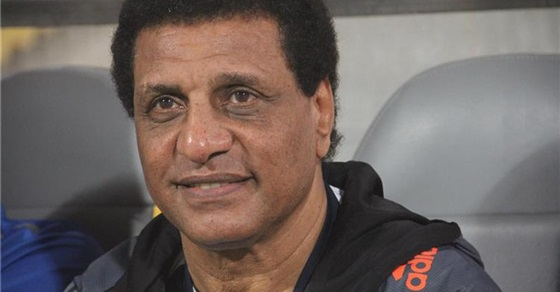
The former coach of Zamalek, an Egyptian football giant, opened up about a scandal in which clubs allegedly bribed referees in African football matches. Farouk Jaafar said in a recently televised interview that he used to hold discussions with referees before African matches in the 1980s when he was the captain of Zamalek. He said that referees used to make him choose whether they wanted a penalty or for referees to give a red card to one of the rival team players. The former football player alleged that in return, the referees asked to be bribed by clubs with perks such as shopping in the Egyptian city of Bour Said. “This was happening with all of the teams that used to play in Africa, including Al Ahly, and El Ismaili.” Jaafar said that a referee dishonestly ruled in favor of the Egyptian football team in one of the qualifier matches for the World Cup in 1990. “The referee canceled a goal for an Egyptian rival team and Egypt qualified for the [World Cup] in Italy in 1990.” Egypt’s Al Zamalek television channel deleted the extract of the interview with the former football player. 
African championships have witnessed referee scandals on several occasions. One of the latest controversial events came in a match between Morocco’s Wydad of Casablanca football club and Tunisia’s EST. The controversy dates to May 2019 during a second leg of the African Champions League, when Wydad’s El Karti scored an equalizer for the Moroccan club at the beginning of the second half. EST was leading the match by 1-0 at the beginning. The referee, however, wrongly ruled out the goal for offside. Wydad protested the decision, asking the referee to use Video Assistant Referee (VAR) to review the equalizing action. The Confederation of African Football (CAF) declared EST as champions. 

UEFA Champions League 2020/2021 – Preliminary Round

Semi-finals (8 August 2020)

Tre Fiori FC – Linfield FC
Referee: Balazs Berke (HUN, photo)
Assistant Referee 1: Balazs Szert (HUN)
Assistant Referee 2: Theodoros Georgiou (HUN)
Fourth Official: Gergo Bogar (HUN)
Referee Observer: Andreas Schluchter (SUI)

KF Drita – Inter Club d'Escaldes
Referee: Robert Jenkins (WAL)
Assistant Referee 1: Ian Bird (WAL)
Assistant Referee 2: Lewiss Edwards (WAL)
Fourth Official: John Jones (WAL)
Referee Observer: Andreas Schluchter (SUI)

Final (11 August 2020)

Winner SF 1 – Winner SF 2
Referee: Ioannis Papadopoulos (GRE)
Assistant Referee 1: Konstantinos Nikolaidis (GRE)
Assistant Referee 2: Vasilios Nikolakakis (GRE)
Fourth Official: Evangelos Manouchos (GRE)
Referee Observer: Andreas Schluchter (SUI)

Final whistle for Rocchi

After a long and very successful career as a top referee, Gianluca Rocchi (Italy) blew his final whistle last night at the end of Serie A match Juventus – Roma. 
Rocchi became referee in 1989, was promoted to Serie A in 2004 and obtained his FIFA badge in 2008. Quickly (2010) included by UEFA in the Elite category, Rocchi was appointed to the Olympics 2012, FIFA U-17 World Cup 2013, FIFA Confederations Cup 2017, UEFA Super Cup 2017, FIFA World Cup 2018, UEFA Europa League final 2019. He also refereed the Italian Super Cup 2013, Saudi Arabia Cup Final 2013, Armenian Cup Final 2015, Italian Cup Final 2016 and was awarded the Giovanni Mauro Prize 2009 and Oscar del Calcio 2017/18 and 2018/19.

The untold story of former FIFA referee Madorran

The peace and tranquility of the Parque Sarmiento de Cordoba was interrupted, on the morning of 30 July 2004, by a thunderous sound coming from the pergola of the plaza. A body lay on a cement bench. On one side was a pack of Parliament cigarettes; on the other, a 9-millimeter pistol. One of the passers-by who heard the shot approached the scene and notified the Police immediately. Fabian Madorran, by then a former referee, had decided to end his life. 16 years after his death, his inner circle spoke for the first time of an event riddled with myths and rumors that affected Argentine soccer.
In the South area of Buenos Aires, Madorran became devoted to the passion that most children and adolescents pursue: football. He was 15 years old when he started refereeing on the field in front of his house in Lanas. His neatness, presence and commitment to justice showed potential at the domestic and international level. Madorran refereed 161 matches in the First Division, from 1997 to 2003. He was a very strict referee, who sent off 153 players in 161 games, which means he issued a red card in almost every match. He became a FIFA referee in 1998 and debuted in a U-20 CONMEBOL tournament, where he sent off 4 Brazilian players, which provoked a big scandal in the South-American confederation. The memories will also remember an image from the year 2001, when he was appointed to referee the match Boca - Almagro and a camera captured him in the foreground singing the historic song «I follow you everywhere, I love you more and more», which is the Boca song, but people said that it was dedicated to his girlfriend, who was in the audience that night. Several former colleagues recall that after performing the fitness test, they met in a group to walk the 450 meters that separated the training ground from the Red and Black bar located on Avenida Crisologo Larralde and shared a meal. There, Madorran often got up from the table quickly and paid for the drinks of the 10, 15 or 20 people who were with him. The same at a year-end referee party at the Hotel Bauen that lasted until the wee hours of the morning and ended with breakfast at his invitation – impossible to refuse – in a nearby bar. His detachment from money made him noticed, moreover, when he had to referee an international cup match abroad. CONMEBOL paid the referees a fee of $1,000 and it was commonplace that Fabian stopped for several minutes in the Free Shop to buy perfumes and other items that, for the most part, would be given to his loved ones. «He was a generous guy, with a big heart», described by those who knew him the most. At the matches in which he was appointed he always came with a procession made up of friends and friends of his friends. He presented himself firmly to the police authorities and made everyone pass: «The boys are with me». Even groups of 15 men have entered the Argentine stadiums thanks to Madorran, who served as a public relations officer. And, after the game, everyone was invited to eat pizza. He paid everything, of course. «Fabian’s pizza and the third period were the best thing that refereeing had», they recall.
Within the refereeing community he made several friends and especially one who later showed some of his characteristics and style: Pablo Lunati. Madorran had inherited the line of Javier Castrilli, rigorous, blunt referee, with the red card in hand at all times. And he added to that some personal nuances. Histrionic and comfortable in front of the cameras, he hinted at a kind of acting facet. Madorran (born in ‘65) and Lunati (67) forged a close relationship, training together. During the week they exercised, on Saturdays Lunati refereed his matches (on the ascent up there) and on Sundays was Madorran’s turn (in Primera). The trust became such that there were unpublished confessions between each other. «No one ever asked me about him and I assure you that I know more about his life than anybody else knows», Lunati says to Infobae. “At the time it bothered me that they said he was homosexual because at that time he was singled out, criticized and, based on that, they discriminated against him. I cried a lot for his helplessness of being able to show it or not”, he said about Madorran on the Virtual Soccer television program in ‘99, when he was chosen by colleagues and referees as the most outstanding in his field. At that time he also resigned from AAA (Argentine Referees Association) and joined SADRA (Union of Sports Referees of the Argentine Republic). Lunati has no qualms about touching this «taboo within football» that unfortunately meant much more two decades ago. “We had different lives because I had a wife and children and he had a male partner. Each one lived his life and respected the other. With me, he never had problems talking about his homosexuality and many times we discussed why he didn’t make it public”, says the person who named him as godfather of one of his children.
Some excesses took their toll on his work. His performance in a promotion match in Cordoba, in which he annulled two goals, marked a turning point in his career. The professional life that he had strictly complied with at the beginning was no longer such. He frequented discos and that brought him problems in his relationship with his partner. He acquired a certain amount of carelessness, which was later revealed on the weekends when he had to referee. “One day we had a very deep talk, but Fabian was half stubborn, he said yes and it went in one ear and out the other. He was afraid of drugs, but he went out a lot at night, drank too much alcohol and smoked too much. He was making a lot of mistakes in games and when you make so many mistakes, so many times in a row, there is something you are not doing well”, Lunati reflects. He had neglected training with his personal trainer and only his genetics and privileged physique allowed him to continue taking the tests required by the AFA. «Do you know how many times I woke up with missed calls from Fabian at 3 or 4 in the morning? Capable of drinking alcohol, watching a movie, becoming melancholic and making him talk. But I had to train the next day and I couldn’t always attend to him. I was close to getting to Primera and had to sleep. As much as he was my friend, I had to separate things. Many times I said to Fabian to stop smoking, stop drinking, stop going out at night. I am not one of those friends who say everything yes, many times he liquidated it and stopped talking to me for weeks”, confesses Lunati. Most of his colleagues had appreciated his selfless generosity, but not everyone liked that style. He was furious when his heterosexuality was put on trial and he heard that he was linked to the «Pink Command», but people claim that there was never discrimination in refereeing against him. In fact, during a pre-season meeting of the referees in Mar del Plata they made fun of his constant leading role and naturalness and gave him a statuette for being the star of the group, something he took sarcastically. “I spoke many times about his homosexuality and last time I said ‘crazy, you have to say it, to free your soul, to be happy. If it makes you happy because it’s your nature, you have to say it and get it out of you’. He replied that it was not the time, but that he was going to do it”, Lunati adds. He had become a chain smoker and did not hide some eccentricities, such as immediately replacing the loss of a gold Dupont lighter valued at $800 because it ensured that cigarettes had a different taste when lit with that particular one. The biggest flaw in Madorran, in which all the interviewees for this article agreed, was his vice for the game. He went often to the floating Casino of Puerto Madero, where he met other personalities related to sports. From the Poker table to the Black Jack, from having a glass of whiskey or Tia Maria (served in coffee cups) to drinking two or three, from smoking a cigarette to three whole packages. What started as a hobby turned into an unbridled bad habit and damaged his healthy routine. 
 «Fabian’s problem was himself, his head». The marks of his performances were getting lower and the reports of the Referees Committee began to be lapidary. Grondona pondered him for the technical and physical category that he exhibited at his best, but he was also aware of the public rumors of his homosexuality and was clear that his file should be handled with extreme caution. Leaving a referee out for his sexual choice could demand a political cost from him because of FIFA’s strict line drops that rejected xenophobia and discrimination. The trigger for his abrupt departure from the refereeing was the game he led between Independiente and River, in the first leg of the knock-out stages of the 2003 Copa Sudamericana. In the first half, he annulled a goal by Independiente due to offside and considered that there was no penalty from Nelson Vivas to the Chilean Olarra in a controversial maneuver that exacerbated all the locals. It would be a fallacy to affirm that it had an impact on a result, but this put him back at the center of the controversy and it was the drop that overflowed the glass. Days before this match, a recognized manager of the Reds met Madorran at a table of the Casino and suggested, with laughter, that he would advance some chips if he gave him a hand in the Cup match. His answer was evidenced by the score: 1-4. Grondona got fed up with the media repercussion he had and was aware of his excesses in private life, so he took away his immunity. On 28 September 2003, eleven days after the Independiente - River, he was appointed to what would be the last match of his career, Chacarita - Banfield. The Referees Committee requested his removal and the AFA Executive Committee granted the request. «The separation is due to physical aspects and technical evaluations, within the legal and conventional framework», they argued through an official statement. In one of his last visits at the headquarters of the Argentine Football Association located on Viamonte Street, he was approached by a journalist who asked him what would become of his future away from refereeing. «I don’t know», he responded with a lost look and about to break. It was one of his last public appearances. 
In parallel to his work as a referee and as a complement to his friendly relationship, Madorran had become a partner of Lunati in a business. They had a maxi kiosk where they made room for 20 computers in the cyber boom. Although they were doing very well, one day he said enough. «Pablo, I’m going to Cordoba». He sold his share of the business and packed his bags. The shock caused by his expulsion from refereeing, while he had in mind to continue refereeing for another decade, was terrible. In addition, he suffered from the definitive breakdown of the relationship with the partner he had for about seven years. And it is worth noting that the same generosity that he showed with his peers was replicated at the family level, taking care of his parents and a brother who suffered from schizophrenia and needed medications that he paid for religiously. He needed to clear his head as soon as possible. His ego and lifestyle were severely affected. From being on television and starring every weekend to being practically unknown. From living with 100 to living with 30. From having dedicated a large part of his life to a career to being forced to leave the profession. He realized that he had many «Friends of the champion», those that only appear in good times. His world was falling apart and he did not know how to cope. All the chips fell at once. It was too many hits together to someone crying out for affection and restraint. In early 2004, he moved to Cordoba, where he sought refuge with some friends. The city was optimal for him because he liked its air, he thought that he would feel contained and would move away from the focus of attention. He enjoyed the first weeks of his free time and even attended some games at the Mario Kempes stadium, then called Chateau Carreras. He even devoted some time to religion, attending mass in a Catholic church in the Cordovan capital. The last psychic stiletto was recorded the week before his suicide. Madorran had obtained a loan through an acquaintance to mortgage the house he had bought for his parents in Remedios de Escalada, Buenos Aires province. The sum was 10,000 dollars. With cash in hand, he sought to “play the hero” at the Puerto Madero Casino. On Sunday, July 25, at night, he traveled by bus from Cordoba to the Federal Capital. On Monday, he processed the mortgage and on Tuesday he went to the casino. He planned to return on Wednesday, but he stayed 48 hours until he put the last weight on the table, without paying attention to the calls and messages that were on his cell phone. Financially cornered because his trial with the AFA was not prospering, and devastated in the mood, he returned to Cordoba. With some debts and emotionally devastated, Madorran took his life on 16 July 2004 in the Parque Sarmiento de Cordoba. His intimates highlight a terrible detail: he had everything so coldly calculated that he triggered the Beretta pistol resting the tip on his palate in a northerly direction, a highly effective execution that leaves no room for failure. He chose the pergola of the Sarmiento Cordovan Park because it was a place that had visual contact with the friend’s apartment where he lived and where he left two letters: one for his lawyer and the other with instructions. In his will, he clarified that the mortgage could be paid with the sale of the cyber machines. His clothes were entrusted to his brother and he left some things for the couple who had hosted him. He allocated part of the money from the trial that he would earn from AFA for his family, another for his lawyer, a minimum percentage for his hosts in Cordoba and another for a very close person. “With Monday’s newspaper announcement, I was not surprised that it ended as it ended. Now you see everything and you realize that he had a problem in the head. It was mainly for being removed from refereeing, but also everything that happened in his life”. Sixteen years after the heartbreaking news, Lunati, who traveled with Madorran’s mother to Cordoba, is still trying to find an explanation that he will not likely be able to find, no matter how many times he turns over the matter. The world of refereeing and football still mourns the loss of Fabian Madorran, who had a story that invites reflection. 

Source: Explica

Clattenburg: offside armpits and accidental handballs

This season was the first which involved the use of video assistant referees in the Premier League - and it's fair to say it had its ups and downs! With the use of lines on the screen for offsides, a new handball rule and a lack of using pitchside monitors, VAR was a talking point just about every week as the league acclimatised to the new technology. Former Premier League referee and Sportsmail columnist Mark Clattenburg gives his thoughts on VAR's debut season in English football. 
Offside armpits 
Remember when David McGoldrick was denied his first Premier League goal because John Lundstram’s big toe was millimetres offside in the build-up? Sheffield United’s supporters were going wild at the Tottenham Hotspur Stadium but after a four-minute examination at Stockley Park, they were sucker-punched. But this is not the technology’s fault. This is down to the lawmakers, and the offside law is one which the International Football Association Board (IFAB) need to address. In football, everybody wants to see goals. That’s what makes the game exciting. Yet our attackers are being left at a severe disadvantage. We get frustrated when we see Stockley Park zooming in to see whether an armpit is offside, but the VAR is just doing what he’s told to do. It’s the law that’s to blame for this. 
Accidental handballs 
A defender accidentally handles the ball in his own box and nothing happens. An attacker accidentally handles the ball and his goal gets chalked off. It’s not right but, as with offside, this is not the fault of the VAR. They are only following the letter of the law and it’s the law which needs to be looked at. Everybody accepts that if someone does a Diego Maradona against England in 1986, or a Thierry Henry against the Republic of Ireland in 2009, then that deserves ruling out. But we saw the uproar after Harry Kane’s equaliser against Sheffield United was disallowed because of a handball by Lucas Moura. He knew nothing about it. Did that deserve to rob that game of a goal? I don’t think so. 
Pitchside monitors 
The little shake of the head and shrug from Mike Dean after the VAR awarded Arsenal an early penalty against Watford on Sunday said it all. Dean hadn’t pointed to the spot after a collision between Craig Dawson and Alexandre Lacazette at the Emirates Stadium. But the VAR looked at it and, after three minutes, decided it was a foul by Dawson. Why not let Dean use that time to decide for himself by using the pitchside monitor? The on-field referee is seeing his calls over-ruled by Stockley Park and that’s frustrating. But the ignoring of monitors is not entirely down to the direction of the PGMOL and its boss Mike Riley. Clubs have made it clear they do not want the flow of the games interrupted. 
Lack of leadership 
I want to see a leader leading and Mike Riley, the head of the PGMOL, does not engage with the media. He sends others to do that, such as Dermot Gallagher on Sky Sports. Gallagher is always looking to support the referees. I get that it might be good for morale but sometimes the truth would be nicer. Educate us on why the Premier League does it differently to other leagues. Explain the shunning of monitors. Go back to basics and let the referees be referees. I’m seeing officials out there who are too afraid to blow their whistles because they don’t want to be told they’re wrong. VAR is about overturning clear and obvious mistakes, not causing more confusion. Riley should be encouraging his officials to be brave and make their own decisions. 
VAR’s first season rating out of 10? 
Six. It has not been a roaring success. Earlier this month we saw three mistakes made in a single day - when Bruno Fernandes and James Ward-Prowse won penalties for Manchester United and Southampton while Tottenham weren’t awarded one for a push by Josh King on Kane. There is plenty of room for improvement but it’s the laws which need changing first and foremost. Accidental handballs and offside armpits are what have upset the rhythm of the Premier League, stripping games of excitement. 

Source: Daily Mail

Collina: Our goal is to have consistency by VARs

Chairman of FIFA's Referee Committee and former accomplished international referee Pierluigi Collina recently took part in the World Football Summit (WFS) Live online conference to discuss a wide-range of topics centred around technology's role in helping referees and namely the development and use of Video Assistant Refereeing (VAR). Speaking with ESPN's Gabriele Marcotti, Collina gave valuable insight from the perspective of a referee on one of football's greatest technological developments in recent history. 
Gabriele Marcotti: Perhaps unfairly, one mistake from a referee can seriously damage them, can hurt their career, hurt the way they’re perceived in the next match. If they make the same mistake and VAR steps in and says, 'No [inaudible]' or fixes the mistake, people become more accepting of the referee? Is that the idea? 
Pierluigi Collina: Nobody cares about the wrong decision taken on the field of play corrected by the VAR. What counts is the final outcome, what counts is the final decision. If the final decision is correct, I would say… I wrongly said nobody because people like me, dealing with the refereeing, we are certainly caring about the wrong decision initially taken by the referee on the field, because we need to improve his quality, we need to put him in a condition to take a correct decision. Basically, this is our activity, this is our job. But in terms of outcome, if the wrong decision is corrected by the VAR, at the end of the day, a correct decision is taken so nobody cares, nobody remembers, while a wrong decision taken in an important match, a key decision taken in the wrong match – we had experiences in the past – can really kill the referee’s career. So, it’s a safety net [that’s] very important for referees. 
- Is there a better way to communicate why certain decisions are made so that in the end it’s very clear to people who made a final decision and why, without this confusion? 
- What I can say is: VAR has been designed to have full control of every possible incident occurring during the match. What is different is the assessment, because it’s not the technology offering the final answer, like with the goal-line technology. It is the human being who is using technology to make the final decision. So basically, at the end there is the human being and as you know, as we all know, human beings are not perfect. Mistakes are part of being human. FIFA has the task to support member associations in their educational programmes with refereeing, including VAR. What we are trying to do is have consistent assessment, to have uniformity, to have consistent decisions taken by video assistant referees, suggesting referees to review or not something on a pitchside monitor. 
- Goal-line technology versus offside ... do you think people would have been more accepting [of VAR] if it had adopted that same black-and-white visual interpretation of goal-line technology? 
- Goal-line technology is an easier exercise compared to offside because you have a line, the goal-line between the posts, under the bar: that’s it. So, if you have a few cameras covering different angles, the cameras are standing in that position. Offside is something that can occur everywhere in roughly 55-60 metres of outfield, so it’s much more complicated to have the same kind of approach goal-line technology had. I can tell you that FIFA has a Technology Innovation Department that is studying how technology can be developed, coordinating companies all over the world in trying to find the best technology that can offer answers, not only related to referees’ decisions but, generally speaking, technology and football. It’s something that goes more in the direction of, let’s say, a final answer given by software or something similar. That might help to make the decision more accepted, so we are working [on it]. I go back, VAR is only five-years-old; it’s a young boy who is learning and who will certainly improve. 
- I wanted to ask you about the use of technology to help referees prepare for matches, to help them study the characteristics of the players, gain an advantage, make their job easier on the pitch. Could you talk a little bit about that and about some of the advancements that people might not know about? 
- I remember before the [FIFA] World Cup Final in 2002 when I refereed Germany v. Brazil, I had to watch a VHS for 90 minutes, five matches, so it took one and a half days to get all this information. Today, technology can provide it very quickly, simply by clicking on your computer, and you can get dozens of images that can offer you information about how a team plays, how players play and so on. Technology is also being used, particularly during this time of pandemic, to have courses. As I said before, FIFA has an important task, that is, to support member associations in refereeing education. We normally deliver courses all over the world. Today, it’s impossible to do it in person, so we use technology to get referees connected all over the world, or in specific countries, with our instructors. So, certainly, technology plays an important role, not only during a match, but also before the match itself. 

Source: FIFA

Syrian refereeing between politics and scandals

In Syria, referees are unprotected against the interference of club administrations, nor of that of the Syrian Federation for Football (SFF) or the General Sports Federation (GSF). Previously, many corruption cases were exposed, after which referees lost their badges and got suspended from work in 2009 after extortions by the Referees Committee. Last June, the Syrian League referees threatened to strike in case refereeing fees were not raised and penalties against them by the aforementioned committee remained in effect. In this file, Enab Baladi investigates cases of referee corruption and their relationship with the Syrian Federation for Football (SFF), as well as the Asian and International Federations. To conduct this investigation, Enab Baladi had contacted former international and local referees. 
Exerting pressure and controlling results 
Muhammad al-Ghadry, a referee in the First Division of the Syrian league, told Enab Baladi his testimony about a match between Qardaha and al-Shabab clubs in the Second Division, in which he was an assistant referee. Back then, the refereeing team received a direct threat from the president of Qardaha sports club, Muhammad Khair Bek. He descended to the dressing room, spoke loudly with the referee of the match and asked him for a penalty kick in favour of his team, then headed towards the assistant referees in a threatening tone and said: “I don’t want to see a single offside flag raised.” However, the referees’ team did not respond to his requests, and al-Ghadry concluded his story by saying, “we finished the match with the lowest possible losses!” (without penalties, assault, or dismissal as a result of malicious reports) Luckily, al-Ghadry and his colleagues suffered the least losses in 2007; however, referee Yasser al-Hussein was not lucky enough in 2009, which has witnessed a huge refereeing scandal. Former vice president of the Syrian Football Federation (SFF), Nader Al-Atrash, told Enab Baladi that al-Hussein was beaten in the dressing room at the end a match between al-Wathba SC and Jableh SC. Back then, Jableh Sporting Club had to win to remain in the first division, which was under the control of a number of brokers. Al-Atrash explained that one of the Referees Committee members appointed al-Hussein as a referee for the match, which al-Atrash described as “a joke in terms of technicality and refereeing”. Both teams tied the match at 2-2 which meant that Jableh SC ranked lower than it was supposed to. Meantime, a member of Jableh SC entered the dressing room and beat al-Hussein severely, took all his money, an estimated amount of 250 thousand Syrian Pounds, and left the dressing room. In the wake of this incident, al-Hussein’s license was suspended; however, he returned later to the pitch before announcing his retirement last June following the recent problems in the local league and the huge criticism by followers of social media platforms and local media outlets. While announcing his retirement decision, al-Hussein said that his license was suspended in 2009 as “a malicious penalty”, after being accused of match-fixing. The 2009 scandal did not pass unnoticed, according to the former international referee and the secretary of Referee’s Committee of Aleppo, Shaker Hamidi. He told Enab Baladi, that an investigation resulted in the dismissal of members of the Referees Committee and a large number of referees. So was the case in 2000 after Tishreen SC won the Syrian League championship, where a number of referees’ licenses were suspended. For his part, Nader al-Atrash recounted another incident in a match between al-Shorta SC and Hutteen SC in 2008. Back then, both teams needed to win to stay in the first-class. Hence, the referee of the match, Abd al-Rahman Rashu, was called to the “State security” branch to allow al-Shorta SC to win the match, the referee promised each side to help it, according to al-Atrash; however, the match ended in a tie. 
To what extent these entities intervene? 
Former international referee and instructor Muhannad Dibba, in an interview with Enab Baladi, considered that the current major attack on Syrian referees is a result of several “catastrophic mistakes made by them”. He also talked about some referees being under pressure in matches of al-Sahel, Jableh, Tishreen, and Qardah Sporting Clubs. Former international referee Abdullah al-Nasser believes that forming a practical refereeing base is a “very complicated and difficult process”. He also considered that corruption in refereeing is an important factor which eats away at the Syrian football.” Al-Nasser added that combating corruption in football needs organized action simply because one individual cannot eliminate it, describing refereeing as the “weakest link” in Syrian football, often blamed for all mistakes and problems. Meantime, former referee, Muhammad al-Ghadry, believes that an honest referee can reject corruption in certain situations, but certainly cannot fight it. According to referee Abdullah al-Nasser, at the beginning of the season, the Referees Committee appoints referees; yet, the names of the chosen ones will be according to the wishes of influential members. Meantime, former vice-president of the Syrian Football Federation (SFF), Nader Al-Atrash, believes that the selection of referees is done in accordance with the whims of the main referees’ committee. During the rule of the Vice-Chairman of the Referees Committee in the Syrian Federation for Football, Nizar Rabbat, all businessmen were able to choose referees based on their whims, as al-Atrash put it. Such information was verified by Enab Baladi from different sources.
What prevents FIFA and the AFC from interfering? 
There should be a connection between referees and the Federation of the International Football Associations (FIFA), but it was always tainted by corruption because nominating the formers for the FIFA international refereeing badge was conducted and conditioned by a local committee and local football federation. Such conditions included spending a specific period of time in the first division and officiating a specific number of matches there. In addition, referees must be “charismatic” and talented. All these conditions open the door for more intervention by the local committees and federations while selecting the names of referees in local contests. The Asian Football Confederation (AFC) leaves room for federations to manage local contests and it does not intervene unless there is a conflict between sporting clubs and one of them filed a complaint to the FIFA or the AFC, which is impossible, according to the former international referee, instructor and observer Muhannad Dibba. He explained that whoever files a complaint is qualified by sports authorities and security services “a traitor to the country” and thus they are forced to resign, which was the case with former President of SFF, Salah Ramadan.
Where Syrian referees stand? 
Syrian referee Farouk Bouzo refereed matches in the 1978 World Cup, in addition to Jamal al-Sharif who officiated at the 1994 World Cup, preceded by the late referee Fawzi Tello, as an assistant referee in the 1966 World Cup qualifiers in a match between Turkey and Portugal along with late referee Rashad Hawasli. However, for years Syrian referees have not participated in international matches. International referee Abdullah al-Nasser told Enab Baladi that for Syrian referees to officiate international matches they need strong presidents of SFF and the Referees Committee, in addition to good international connections, especially when they have good reputations, they can easily promote a positive image about Syrian referees to the globe. Throughout its history, the SFF had good ties with both FIFA and the AFC Referees’ Committee thanks to Brigadier Farouk Bouzo, who contributed in improving the image of Syrian referees globally and continually, as al-Nasser put it. He also justified this through the participation of former international referee Jamal al-Sharif in three World Cups, namely in 1986, 1990, and 1994. International referee Shaker Hamidi agrees with al-Nasser, and added that until 2010, Syria had six “elite” referees at the continental level, thanks to Farouk Bouzo who managed to promote a good image about Syrian referees abroad. Muhannad Dibba believes that previously Syria was present in Arab, Asian, and International federations, which is no longer the case, since it has no representation due to the weakness of the current personnel, and therefore an absence of referees. Dibba added that lack of development in the refereeing system along with the corruption incident of 2009, as well as lack of talents, let alone the spread of patronage-based relationships, all have urged continental and international federations to lose faith and confidence in Syrian refereeing. Meantime, Nader al-Atrash said that the absence of referees of international forums comes as a result of sanctions imposed on the Syrian regime as well as referees’ poor performance in recent years. 

Source: Enab Baladi