“Team One” arrived in Qatar

FIFA President Gianni Infantino has personally welcomed the 129 referees, assistant referees and video match officials overseeing the FIFA World Cup Qatar 2022, and kicked-off their official training camp by emphasising the fundamental role the group he affectionally labelled “Team One” has to play in delivering the best ever edition of football’s greatest competition.
“You are FIFA’s team,” President Infantino said. “You are our team and you are actually the most important team in the tournament because without you there is no football; there is no FIFA World Cup. We need Team One to enter the pitch first. We need Team One to kick off the first game on 20th November, and we need Team One to stop the last game and award the title to the World Champions.”
In his speech, the President noted that for the first time in FIFA World Cup history, female match officials are among the 36 referees, 69 assistant referees and 24 match officials chosen to officiate at the tournament. The FIFA President pointed out the importance of unity, and encouraged participants to both savour the moment and to believe in themselves.
“There are, for the first time, six women as well, present. But whether men or women, it’s referees. For us, for me, we are all part of the same team,” President Infantino added. “You will feel a lot during this World Cup. The emotion of being part of this adventure. The emotion of having four or five billion people all over the world looking at what is happening here. And you are asked to be there, to be fit, to be ready, to take decisions, to take responsibility in a very short time. You are the best in the world. That’s why you’re here.” Following the speeches and seminar, the officials took part in a day of orientation that included units on health and fitness, VAR and assistive technologies, and decision making. 

Source: FIFA

Loustau Jr. announced his retirement

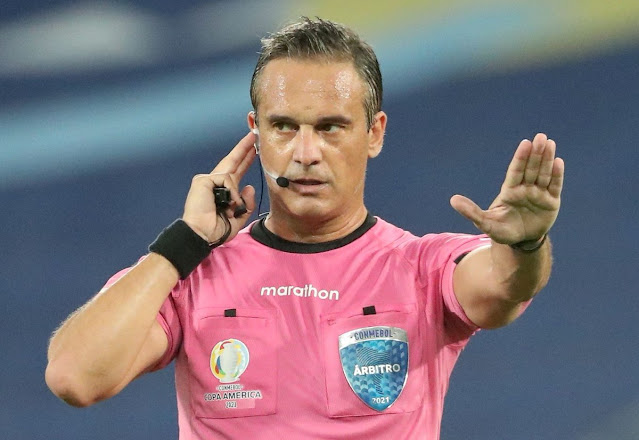
Referee Patricio Loustau, 47, announced his professional retirement before the Qatar 2022 World Cup. His last match was between River and Betis. Loustau, with eight Superclasicos and several finals to his credit, comes from delivering justice in the 2022 Copa Libertadores final between Flamengo and Atletico Paranaense in Guayaquil, Ecuador.
The referee was born on 15 April 1975 in Lomas de Zamora, Buenos Aires. From that day he was linked to refereeing by his last name. His father, Juan Carlos, was an Argentine refereeing legend who was present at the 1990 World Cup and in 1999 he was chosen by the IFFHS as the second-best referee in the world.
Pato, as Loustau Jr. is nicknamed, made his debut as a referee in the First Division of Argentina on 21 August 2009, in a match where Godoy Cruz beat Gimnasia La Plata 2-0, for the first match of the Apertura. In 2011, he became a FIFA referee and from there he kept adding experience. He has refereed matches in the Copa America, World Cup Qualifiers, Copa Sudamericana and Copa Libertadores final.

Source: TyC Sports

Italian referee prosecutor arrested for drug trafficking

In a truly extraordinary story, the chief prosecutor for the Italian Referees Association (AIA) has been arrested for international drug trafficking. There were 42 arrests in the Milan and Lombardy area connected to the trafficking ring, which was accused of smuggling six tonnes of marijuana and hashish into the country. Among those stopped by police there was Rosario D’Onofrio, who had until today been working as the chief prosecutor and legal advisor for the Italian Referees’ Association. AIA President Alfredo Trentalange announced that D’Onofrio had resigned this morning, without stating the reasons. FIGC President Gabriele Gravina said he found the news “disconcerting” and had asked for an explanation from the AIA. D’Onofrio was formerly an officer in the army and was already in the news on October 28 when he was deferred to the disciplinary commission of the FIGC (Italian Football Federation) for failing to open an investigation when a former assistant referee protested at the way referees were graded. (Source: Football Italia)
The story of the chief prosecutor of the Italian Referees Association arrested for international drug trafficking continues to get even stranger. Rosario D’Onofrio resigned this morning, and it was only later revealed it was because he was one of 42 people arrested for running a drug trafficking organisation in the Milan area, which saw six tonnes of marijuana and hashish recovered by police. The Italian Referees Association (AIA) then released a statement this evening giving even more surprising details. According to the AIA, D’Onofrio had already been arrested and put under house arrest in 2020 but declined to inform them of that fact. He had therefore violated their code of ethics and lied when applying for the promotion to chief prosecutor. Meanwhile, former referee Piero Giacomelli has told La Repubblica newspaper that D’Onofrio had effectively “ended my career” and had a “disproportionate power to hand out punishments” to officials he didn’t like. Giacomelli was suspended in February 2022 due to irregularities in the expenses account to the tune of €70. “D’Onofrio received an award in July as best national director for referees. Assistant referee Avalos provided a year ago telephone interceptions where D’Onofrio told him what he should and shouldn’t do to climb the performance tables. Referee La Penna was meant to become an international in place of a different referee, but then he too was accused of irregular expenses and was suspended, only to then be brought back by D’Onofrio.” (Source: Football Italia)

World Cup referee Tello warms up for Qatar with 10 red cards in Argentina

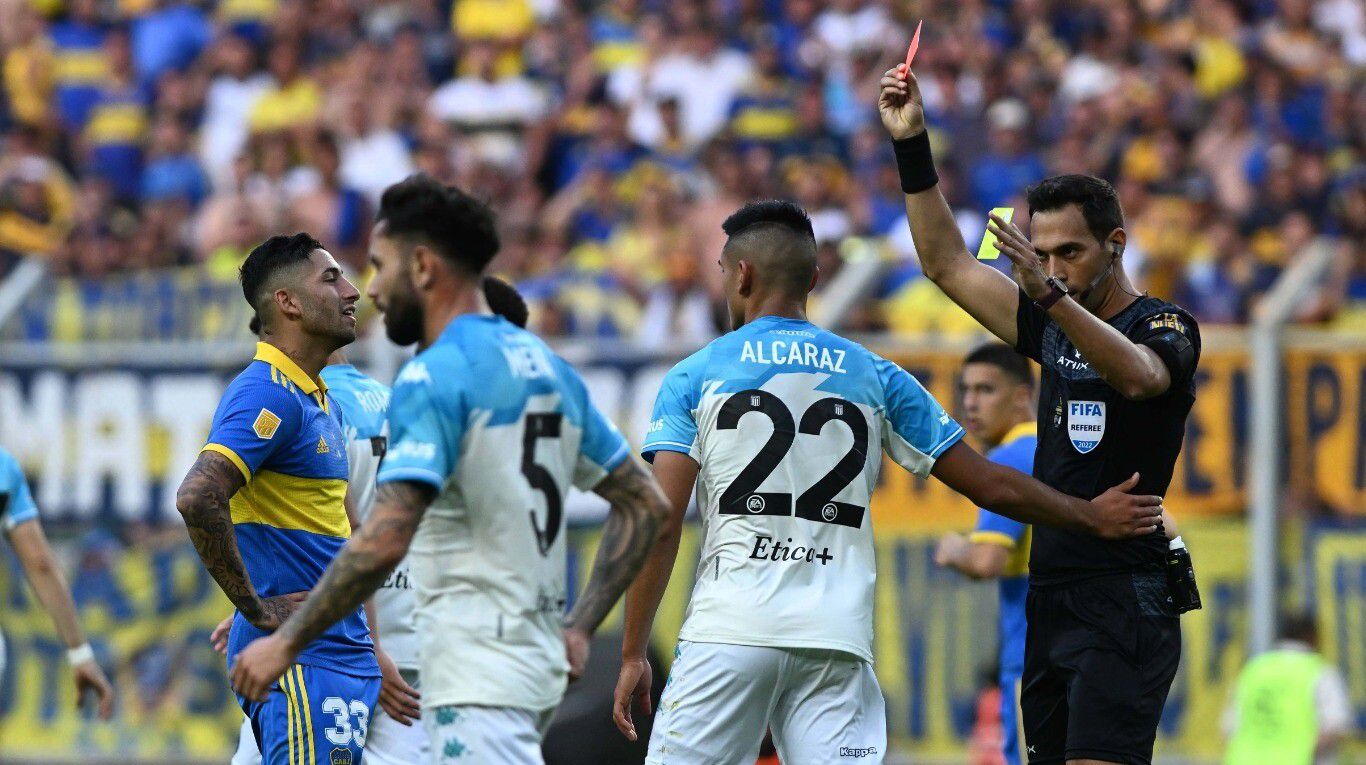
Referee Facundo Tello awarded an incredible ten red cards after a fight broke out during Boca Junior's Trophy of Champions 2-1 loss to Racing.
Tied at a goal apiece after 90 minutes, both sides were left with ten men with just a few minutes left to play as a fight broke out between Boca's Sebastian Villa and Racing's Johan Carbonero. The scuffle reportedly started after the Xeneizes demanded a penalty was given in the dying embers of the match for a handball inside the area. After the mele had cooled off, the referee delivered both Villa and Carbonero their marching orders, but he wasn't quite finished there.
The match continued to extra-time, with Carlos Alcaraz scoring a late winner with a glancing header, sending the Estadio La Pedrera into bedlam. Alcaraz's over-the-top celebrations sparked a nerve with the Boca players, who confronted him on the edge of the pitch, pushing him, grabbing his ear, and throwing the ball at him. After the mele had quietened down, Tello handed out five red cards to Boca, and two to Racing, ensuring Alcarez was not left unpunished. All of Luis Advincula, Carlos Zambrano, Diego Gonzales, Frank Fabra and Dario Benedetto were shown red for Boca, while Catriel Cabellos was sent marching for Racing. Boca's Alan Varela also picked up a second yellow card earlier in extra time, meaning Tello had sent off a grand total of seven Boca players. After finding himself in the thick of a brawl on Sunday night, Tello will travel to the 2022 World Cup, with six other South American referees.
The Argentine was born in Buenos Aires Province in 1982 and has refereed a total of 118 professional matches in the Primera Division. During that time, he has given out 612 yellow cards and 45 red cards, with this not being the first time he's given out more than one red card in a match this season. Back in September, during a match between Racing and Club Atletico Platense, the referee awarded three red cards and six yellow cards during a game that saw Racing win 1-0. But he is considered one of the best South American referees around and was included into FIFA's roster of international referees in 2019. Since then, he has gone on to officiate at the South American U-20 Championships and referee a game between Jordan and Morocco in the 2021 Arab Cup.

Source: Daily Mail

FIFA Futsal World Cup 2024 Qualifiers (UEFA) – Main Round (Matchday 4)

8-9 November 2022

Croatia – Israel
Referee 1: Vlad Ciobanu (ROU, photo)
Referee 2: Bogdan Hanceariuc (ROU)
Third Referee: Liviu Chita (ROU)
Timekeeper: Nikola Jelić (CRO)

Cyprus – Spain
Referee 1: Denys Kutsyi (UKR)
Referee 2: Yevhen Hordiienko (UKR)
Third Referee: Maria Myslovska (UKR)
Timekeeper: Michalis Christofidis (CYP)

Denmark – Finland
Referee 1: Marjan Mladenovski (MKD)
Referee 2: Josip Barton (MKD)
Third Referee: Done Ristovski (MKD)
Timekeeper: Martin Christensen (DEN)

Kazakhstan – Montenegro
Referee 1: Maximilian Alkofer (GER)
Referee 2: Christian Gundler (GER)
Third Referee: David Nissen (DEN)
Timekeeper: Einadin Idrissov (KAZ)

Georgia – Austria
Referee 1: Lukaš Peško (SVK)
Referee 2: Rastislav Behancin (SVK)
Third Referee: Martin Matula (SVK)
Timekeeper: Grigol Bliadze (GEO)

Kosovo – Ukraine
Referee 1: Admir Zahovič (SVN)
Referee 2: Aleš Mocnik Peric (SVN)
Third Referee: Dejan Veselic (SVN)
Timekeeper: Besart Ismajli (KOS)

Greece – Poland
Referee 1: Kirill Naishouler (FIN)
Referee 2: Arttu Kyynaeraeinen (FIN)
Third Referee: Paavo Komppa (FIN)
Timekeeper: Dimitrios Tzafolias (GRE)

Serbia – Norway
Referee 1: Aslan Galayev (KAZ)
Referee 2: Talgat Kosmukhambetov (KAZ)
Third Referee: Turekhan Tursumbayev (KAZ)
Timekeeper: Milos Dordevic (SRB)

Slovakia – Germany
Referee 1: Hikmat Qafarli (AZE)
Referee 2: Knyaz Amiraslanov (AZE)
Third Referee: Ali Jabrayilov (AZE)
Timekeeper: Angelos Daoutis (SVK)

Italy – Sweden
Referee 1: Daniel Matkovic (SUI)
Referee 2: Darko Boskovic (SUI)
Third Referee: Marco Rothenfluh (SUI)
Timekeeper: Giovanni Zannola (ITA)

Portugal – Lithuania
Referee 1: Tomasz Frak (POL)
Referee 2: Slawomir Steczko (POL)
Third Referee: Dominik Cipinski (POL)
Timekeeper: Miguel Castilho (POR)

World Cup semi-final referee Cunha retired due to losing his FIFA badge

According to Uruguayan journalist Hernan Braga, Andres Cunha was not nominated by AUF for the FIFA List 2023 and decided to retire at the end of the 2022 national season. He will continue as a FIFA video match official in 2023.
Prior to the historic first final of the Uruguay Cup between Defensor Sporting and La Luz, at the Centenario Stadium, there was an unusual gesture on the part of the two teams towards the referee of the match, Andres Cunha. The Defensor Sporting and La Luz footballers made a hallway and applauded the referee. Later, his fellow referees gave him a plaque in recognition of his career.
Andres Cunha made his First Division debut in 2011 and became a FIFA referee in 2013. He reached the pinnacle of his career at the 2018 FIFA World Cup with the semi-final France – Belgium, the same year when he refereed the historic Copa Libertadores final between River Plate and Boca Juniors at the Santiago Bernabeu stadium in Madrid (Spain). He also attended two Copa America tournaments (2015, 2016) and the 2017 FIFA U-20 World Cup.

Source: Futbol Uy

UEFA CORE 54 with top instructors

The 2022 edition of the Center of Refereeing Excellence (CORE) that UEFA organizes each year, a project that brings together referees from all over the continent and whose objective is to train the European referees of the future, came to an end last month.
Divided into two parts, the CORE 54 course started in Nyon, last May, with the introductory course. Some heavyweights of European refereeing, such as Nicola Rizzoli, Victor Kassai, Milorad Mazic, Bjorn Kuipers and Sandro Scharer, led the activities and the attendees carried out technical and sporting tests, entering a new international environment of differences to adapt their style of refereeing to any context. After the summer break, the second part took place again in Switzerland at the UEFA headquarters. The consolidation course once again had the presence of refereeing personalities such as Roberto Rosetti, who alternated in the presentations of match analysis, VAR and various regulations in the classroom and on the pitch.

Source: AIA

Expulsion of Rattin in 1966 lasted 10 minutes and led to creation of cards

The Argentine player was invited to leave the field during the game against England, but he remained on the field for several minutes. It happened in the 1966 World Cup that took place in England. The story occurred in the quarter-finals, where England and Argentina played in the emblematic Wembley Stadium, in front of 90,000 spectators. The game seemed to progress under usual circumstances, but Argentine defender Antonio Rattin did not understand it that way, considering that the German referee Rudolf Kreitlein decided everything in favor of the local team, England. “He even invented handballs”, said Rattin, who played his entire career at the club level for Boca Juniors.
Rattin said at the time that he only intended to speak with the referee to express his disagreement with the decisions. Those with good memory, for their part, believe that he only had the intention of delaying the game, going so far as to ask for an interpreter, since Rattin did not speak German or English, while Kreitlein did not understand a word of Spanish. As there were no yellow or red cards at the time, the referee decided to punish the attitude of the Argentine defender with expulsion, but… How? With gestures that were the signals of the time. “Get out!” Kreitlein exclaimed, pointing the way to the changing rooms, but Rattin, furious, remained on the field for the next 10 minutes. He insisted on the presence of an interpreter, to understand the reason for the referee's decision, but this finally did not happen. Everything was very messy and full of controversies. The referee would report later that the cause for expulsion was because "he looked at me with bad intentions, that's when I realized that he had insulted me."
This story and some other failures in communication during the game led FIFA and its president at the time, Sir Stanley Rous (a former referee), to study how to communicate universal disciplinary decisions, which could be understood by any player, without the need to resort to languages ​​or gestures. A short time later, his friend and member of the FIFA Referees Committee, former English referee Ken Aston, proposed the use of two cards as a solution, one yellow, which was synonymous with calm and caution, and the other red, which directly implied the expulsion. He stated in his proposal that his inspiration was born when he was driving his car down Kensington High Street, where he had to stop at a traffic light after the lights changed.
Four years later, at the 1970 World Cup in Mexico, the use of cards was adopted for the first time and Aston was appointed President of the FIFA Referees Committee. A few days before the start of the World Cup, the 30 referees who would participate in the event met at the State University of Mexico City, along with the heads of participating delegations, technical directors and players. The president of FIFA, Sir Stanley Rous, together with his members of the Referees Committee, reported that due to the events that occurred in the previous World Cup during the match between Argentina and England, they had decided to create and put into practice the use of disciplinary cards to avoid doubts or solve all kinds of language problems. The protocol became zero conversation and gestures. When a referee considers that an act causing a reprimand has been committed, he will penalize it with a yellow card, while he will show a red card in cases of expulsion. In both cases, the players should comply immediately, without any kind of reaction.
The first referee to use the card was the German Kurt Tschenscher in the opening match of Mexico 1970, played at the Azteca stadium, between the local team and Belgium, where there were 107,000 spectators. The receiver of that first historical card was the Mexican captain, Gustavo Pena, after 30 minutes of play. No one was sent off in that World Cup, and not precisely because of the reticence of the referees, but because of the good behaviour of the players.
Experience shows that the new tool available to the referees around the world was very helpful for a good control of the game. And the history books say that the architect of their invention, although unintentionally, was an Argentine: Antonio Rattin. The books also say that another Argentine was also a reason for using the red cards in a World Cup final: Pedro Monzon, during Italia 90, after a hard tackle on Jürgen Klinsmann.

UEFA Europa Conference League 2022/23 – Group Stage (Matchday 6)

3 November 2022

RFS – AC Fiorentina
Referee: Mads-Kristoffer Kristoffersen (DEN, photo)
Assistant Referee 1: Ole Kronlykke (DEN)
Assistant Referee 2: Jakob Mastrup (DEN)
Fourth Official: Jorgen Burchardt (DEN)
Referee Observer: Eyjolfur Olafsson (ISL)

Istanbul Başakşehir – Heart of Midlothian
Referee: Goga Kikacheishvili (GEO)
Assistant Referee 1: Davit Gabisonia (GEO)
Assistant Referee 2: David Chigogidze (GEO)
Fourth Official: Aleko Aptsiauri (GEO)
Referee Observer: Carlos Velasco Carballo (ESP)

Slavia Praha – Sivasspor
Referee: Rade Obrenovič (SVN)
Assistant Referee 1: Jure Praprotnik (SVN)
Assistant Referee 2: Grega Kordež (SVN)
Fourth Official: Dragoslav Perič (SVN)
Referee Observer: Frank De Bleeckere (BEL)

CFR Cluj – Ballkani
Referee: Daniel Schlager (GER)
Assistant Referee 1: Chrstian Dietz (GER)
Assistant Referee 2: Sven Waschitzki (GER)
Fourth Official: Tobias Reichel (GER)
Referee Observer: Antonio Damato (ITA)

Djurgarden – Shamrock Rovers
Referee: Nicholas Walsh (SCO)
Assistant Referee 1: Graeme Stewart (SCO)
Assistant Referee 2: Calum Spence (SCO)
Fourth Official: Alan Muir (SCO)
Referee Observer: Kristinn Jakobsson (ISL)

KAA Gent – Molde
Referee: Sebastian Gishamer (AUT)
Assistant Referee 1: Roland Riedel (AUT)
Assistant Referee 2: Markus Reichholf (AUT)
Fourth Official: Alan Kijas (AUT)
Referee Observer: Herbert Fandel (GER)

Zalgiris – Slovan Bratislava
Referee: Luis Godinho (POR)
Assistant Referee 1: Luis Teixeira (POR)
Assistant Referee 2: Pedro Almeida (POR)
Fourth Official: Andre Narciso (POR)
Referee Observer: Markus Strömbergsson (SWE)

Pyunik – Basel
Referee: Horatiu Fesnic (ROU)
Assistant Referee 1: Valentin Avram (ROU)
Assistant Referee 2: Alexandru Cerei (ROU)
Fourth Official: Sebastian Colţescu (ROU)
Referee Observer: Hannes Kaasik (EST)

Apollon – Vaduz
Referee: Dario Bel (CRO)
Assistant Referee 1: Goran Pataki (CRO)
Assistant Referee 2: Kruno Šaric (CRO)
Fourth Official: Patrik Kolarić (CRO)
Referee Observer: Kevin Parry (WAL)

AZ Alkmaar – Dnipro
Referee: Anastasios Papapetrou (GRE)
Assistant Referee 1: Tryfon Petropoulos (GRE)
Assistant Referee 2: Iordanis Aptosoglou (GRE)
Fourth Official: Andreas Gamaris (GRE)
Referee Observer: Shmuel Shteif (ISR)

Lech – Villarreal
Referee: Nathan Verboomen (BEL)
Assistant Referee 1: Mathias Hillaert (BEL)
Assistant Referee 2: Ruben Wyns (BEL)
Fourth Official: Lothar D'Hondt (BEL)
Referee Observer: Vladimir Medved (SVK)

Hapoel Beer Sheva – Austria Wien
Referee: Elchin Masiyev (AZE)
Assistant Referee 1: Elshad Abdullayev (AZE)
Assistant Referee 2: Parvin Talibov (AZE)
Fourth Official: Farid Hajiyev (AZE)
Referee Observer: Pavle Radovanović (MNE)

FCSB – West Ham
Referee: Sascha Stegemann (GER)
Assistant Referee 1: Marco Achmüller (GER)
Assistant Referee 2: Christof Günsch (GER)
Fourth Official: Florian Badstübner (GER)
Referee Observer: Carlos Clos Gomez (ESP)

Silkeborg – Anderlecht
Referee: Daniele Chiffi (ITA)
Assistant Referee 1: Giorgio Peretti (ITA)
Assistant Referee 2: Giovanni Baccini (ITA)
Fourth Official: Matteo Marchetti (ITA)
Referee Observer: Boško Jovanetić (SRB)

Partizan – Slovacko
Referee: Pawel Raczkowski (POL)
Assistant Referee 1: Radoslaw Siejka (POL)
Assistant Referee 2: Adam Kupsik (POL)
Fourth Official: Pawel Malec (POL)
Referee Observer: Petteri Kari (FIN)

FC Köln – OGC Nice 
Referee: Cesar Soto Grado (ESP)
Assistant Referee 1: Iker De Francisco Grijalba (ESP)
Assistant Referee 2: Carlos Alvarez Fernandez (ESP)
Fourth Official: Alejandro Muniz Ruiz (ESP)
Referee Observer: Guy Goethals (BEL)

UEFA Europa League 2022/2023 – Group Stage (Matchday 6)

3 November 2022

Midtjylland – Sturm Graz
Referee: Matej Jug (SVN, photo)
Assistant Referee 1: Matej Žunič (SVN)
Assistant Referee 2: Manuel Vidali (SVN)
Fourth Official: Alen Borošak (SVN)
VAR: Nejc Kajtazović (SVN)
AVAR: Asmir Sagrković (SVN)
Referee Observer: Erol Ersoy (TUR)

Feyenoord – Lazio
Referee: Irfan Peljto (BIH)
Assistant Referee 1: Davor Beljo (BIH)
Assistant Referee 2: Damir Lazić (BIH)
Fourth Official: Miloš Gigovic (BIH)
VAR: Bastian Dankert (GER)
AVAR: Alejandro Hernandez Hernandez (ESP)
Referee Observer: Michail Argyrou (CYP)

Real Sociedad – Manchester United
Referee: Georgi Kabakov (BUL)
Assistant Referee 1: Martin Margaritov (BUL)
Assistant Referee 2: Diyan Valkov (BUL)
Fourth Official: Ivaylo Stoyanov (BUL)
VAR: Marco Fritz (GER)
AVAR: Tomasz Kwiatkowski (POL)
Referee Observer: Murat Ilgaz (TUR)

Sheriff – Omonia
Referee: Fran Jović (CRO)
Assistant Referee 1: Hrvoje Radić (CRO)
Assistant Referee 2: Luka Pušic (CRO)
Fourth Official: Ante Culjak (CRO)
VAR: Michael Fabbri (ITA)
AVAR: Alessandro Di Paolo (ITA)
Referee Observer: Konrad Plautz (AUT)

Qarabag – Freiburg
Referee: Aleksei Kulbakov (BLR)
Assistant Referee 1: Dmitri Zhuk (BLR)
Assistant Referee 2: Oleg Maslyanko (BLR)
Fourth Official: Dzmitry Dzmitryieu (BLR)
VAR: Tiago Martins (POR)
AVAR: Hugo Miguel (POR)
Referee Observer: Georgios Bikas (GRE)

Olympiakos – Nantes
Referee: Serhiy Boiko (UKR)
Assistant Referee 1: Valentyn Kutsev (UKR)
Assistant Referee 2: Volodymyr Volodin (UKR)
Fourth Official: Anatoliy Abdula (UKR)
VAR: Piotr Lasyk (POL)
AVAR: Pawel Pskit (POL)
Referee Observer: Stefano Podeschi (SMR)

Trabzonspor – Ferencvaros
Referee: Harm Osmers (GER)
Assistant Referee 1: Robert Kempter (GER)
Assistant Referee 2: Dominik Schaal (GER)
Fourth Official: Robert Schröder (GER)
VAR: Christian Dingert (GER)
AVAR: Sören Storks (GER)
Referee Observer: Elmir Pilav (BIH)

AS Monaco – Crvena Zvezda
Referee: Serdar Gözübüyük (NED)
Assistant Referee 1: Joost van Zuilen (NED)
Assistant Referee 2: Johan Balder (NED)
Fourth Official: Jochem Kamphuis (NED)
VAR: Jeroen Manschot (NED)
AVAR: Rob Dieperink (NED)
Referee Observer: Stefan Messner (AUT)

Arsenal – Zürich
Referee: Erik Lambrechts (BEL)
Assistant Referee 1: Jo De Weirdt (BEL)
Assistant Referee 2: Rien Vanyzere (BEL)
Fourth Official: Jasper Vergoote (BEL)
VAR: Dennis Higler (NED)
AVAR: Massimiliano Irrati (ITA)
Referee Observer: Hugh Dallas (SCO)

Bodo Glimt – PSV
Referee: Donatas Rumšas (LTU)
Assistant Referee 1: Aleksandr Radius (LTU)
Assistant Referee 2: Dovydas Sužiedelis (LTU)
Fourth Official: Robertas Valikonis (LTU)
VAR: Guillermo Cuadra Fernandez (ESP)
AVAR: Xavier Estrada Fernandez (ESP)
Referee Observer: Milorad Mažić (SRB)

Dynamo Kyiv – Fenerbahçe
Referee: Duje Strukan (CRO)
Assistant Referee 1: Bojan Zobenica (CRO)
Assistant Referee 2: Alen Jakšić (CRO)
Fourth Official: Marin Vidulin (CRO)
VAR: Luca Pairetto (ITA)
AVAR: Tihomir Pejin (CRO)
Referee Observer: Michael Riley (ENG)

Rennes – AEK Larnaca
Referee: Mohammed Al-Hakim (SWE)
Assistant Referee 1: Fredrik Klyver (SWE)
Assistant Referee 2: Max Wilde (SWE)
Fourth Official: Bojan Pandžić (SWE)
VAR: Paolo Valeri (ITA)
AVAR: Roi Reinshreiber (ISR)
Referee Observer: Jan Wegereef (NED)

AS Roma – Ludogorets

Referee: Nikola Dabanović (MNE)
Assistant Referee 1: Milovan Djukić (MNE)
Assistant Referee 2: Vladan Todorović (MNE)
Fourth Official: Miloš Savović (MNE)
VAR: Pol van Boekel (NED)
AVAR: Bartosz Frankowski (POL)
Referee Observer: Uno Tutk (EST)

Real Betis – HJK Helsinki
Referee: William Collum (SCO)
Assistant Referee 1: David McGeachie (SCO)
Assistant Referee 2: Alan Mulvanny (SCO)
Fourth Official: David Dickinson (SCO)
VAR: Stuart Attwell (ENG)
AVAR: Fedayi San (SUI)
Referee Observer: Vladimir Petrov (UKR)

Union St. Gilloise – Union Berlin
Referee: Andris Treimanis (LVA)
Assistant Referee 1: Haralds Gudermanis (LVA)
Assistant Referee 2: Aleksejs Spasjoņņikovs (LVA)
Fourth Official: Aleksandrs Golubevs (LVA)
VAR: Marco Guida (ITA)
AVAR: Fabio Maresca (ITA)
Referee Observer: Stephane Lannoy (FRA)

Braga – Malmö
Referee: Ruddy Buquet (FRA)
Assistant Referee 1: Cyril Gringore (FRA)
Assistant Referee 2: Guillaume Deabrt (FRA)
Fourth Official: Bastien Dechepy (FRA)
VAR: Benoît Millot (FRA) 
AVAR: Jerôme Brisard (FRA)
Referee Observer: Iain Robertson Brines (SCO)