IFFHS World’s Best Referee of Decade 2011-2020: Brych (GER)

The IFFHS has devised an equitable method for determining the World’s Best Referee of the Decade 2011-2020. The Federation has taken in consideration the Top 20 of each annual ranking of each category concerned and allocated points to each place. So the first placed received 20 points, the second placed 19 points, the third placed 18 points… and 1 point for the 20th place. If the annual ranking comprised fewer than 20 referees, no point were awarded for the unoccupied places. Adding the points from the individual years, Germany’s Top Referee Felix Brych is the World’s Best Referee of the Decade 2011-2020. The 45-years-old Brych, who was one time The World’s Best Referee of the year in 2017, is known for his regularity (second in 2019 and 2020, third in 2014, fourth in 2013, 2015 and 2018), so he became a deserved winner with only one point more than Cuneyt Cakir from Turkey and 8 more than Netherland’s Bjorn Kuipers, two referees with similar regularity and personality. (Source: IFFHS

IFFHS World’s Best Referee of Decade 2011-2020 
1. Felix Brych (GER, photo) 141 p 
2. Cuneyt Cakir (TUR) 140 p 
3. Bjorn Kuipers (NED) 133 p 
4. Nicola Rizzoli (ITA) 113 p 
5. Nestor Pitana (ARG) 88 p 
6. Howard Webb (ENG) 76 p 
7. Damir Skomina (SVN) 76 p 
8. Martin Atkinson (ENG) 69 p 
9. Viktor Kassai (HUN) 56 p 
10. Antonio Mateu Lahoz (ESP) 54 p 
11. Gianluca Rocchi (ITA) 53 p 
12. Mark Clattenburg (ENG) 52 p 
13. Pedro Proenca (POR) 49 p 
14. Carlos Velasco Carballo (ESP) 47 p 
15. Milorad Mazic (SRB) 35 p 
16. Ravshan Irmatov (UZB) 33 p 
17. Jonas Eriksson (SWE) 30 p 
18. Clement Turpin (FRA) 30 p 
19. Alireza Faghani (IRN) 23 p

IFFHS World’s Best Woman Referee of Decade 2011-2020: Steinhaus (GER)

The IFFHS has devised an equitable method for determining the World’s Best Referee of the Decade 2011-2020. The Federation has taken in consideration the Top 20 of each annual ranking of each category concerned and allocated points to each place. So the first placed received 20 points, the second placed 19 points, the third placed 18 points… and 1 point for the 20th place. If the annual ranking comprised fewer than 20 referees, no point were awarded for the unoccupied places. Adding the points from the individual years, Bibiana Steinhaus won sovereign the Ranking of the World’s Best Woman Referee of Decade 2011-2020. In 2011, she was the first woman to referee a FIFA Women’s World Cup Final and in 2012, the first Woman to referee Summer Olympics Women’s Football Final. In 2017, she became the first female in the history to referee a men’s game in the German Bundesliga and also the first woman to whistle a German men’s Super Cup Final betwenn Bayern München and Borussia Dortmund. Steinhaus was named on the FIFA referees list in 2005 and went on to officiate at a whole host of tournaments. She refereed not only at three FIFA U-20 Women’s World Cups, but also at the last three FIFA Women’s World Cups, in Germany 2011, Canada 2015 and France 2019. She announced her retirement in September 2020. Switzerland's Esther Staubli took the second place in the ranking of the Decade without winning any annual Award. She was always in the Top 10 of the World’s best each year (second in 2017 and 2020) and deserved this place. In the third place, Kateryna Monzul, who won in 2015 before French Stephanie Frappart, winner in 2019 and 2020. The 36-year-old referee is said to have been the first female referee to officiate Europe’s most prestigious and high-level soccer events. (Source: IFFHS

IFFHS World’s Best Woman Referee of Decade 2011-2020 
1. Bibiana Steinhaus (GER, photo) 171 p 
2. Esther Staubli (SUI) 135 p 
3. Kateryna Monzul (UKR) 124 p 
4. Stephanie Frappart (FRA) 88 p 
5. Katalin Kulcsar (HUN) 78 p 
6. Claudia Umpierrez (URU) 71 p 
7. Carol Anne Chenard (CAN) 69 p 
8. Pernilla Larsson (SWE) 48 p 
9. Riem Hussein (GER) 43 p 
10. Kate Jacewicz (AUS) 43 p 
11. Jenny Palmqvist (SWE) 39 p 
12. Teodora Albon (ROU) 39 p 
13. Anastasia Pustovoitova (RUS) 32 p 
14. Jana Adamkova (CZE) 28 p 
15. Carolina Vitulano (ITA) 28 p 
16. Anna-Marie Keighley (NZL) 27 p 
17. Gladys Lengwe (ZAM) 24 p 
18. Sara Persson (SWE) 24 p 
19. Olga Miranda (PAR) 22 p 
20. Ri Hyang-Ok (PRK) 18 p

CAF African Nations Championship 2020

Cameroon, 16 January – 7 February 2021

Referees
1. Lahlou Benbraham (ALG)
2. George Gatogato (BDI)
3. Alioum Alioum (CMR, photo)
4. Jean Ndala (COD)
5. Mohamed Maarouf (EGY)
6. Lidya Tafesse (ETH)
7. Daniel Laryea (GHA)
8. Peter Waweru (KEN)
9. Andofetra Rakotojaona (MAD)
10. Boubou Traore (MLI)
11. Beida Dahane (MTN)
12. Ahmad Heeralall (MRI)
13. Samir Guezzaz (MAR)
14. Jean Ishimwe (RWA)
15. Issa Sy (SEN)
16. Sadok Selmi (TUN)

Assistant Referees
1. Habib Sanou (BFA)
2. Carine Atezambong (CMR)
3. Issa Yaya (CHA)
4. Liban Ahmed (DJI)
5. Olivier Safari (COD)
6. Boris Ditsoga (GAB)
7. Abdulaziz Jawo (GAM)
8. Gilbert Cheruiyot (KEN)
9. Attia Amsaaed (LBY)
10. Lionel Andrianantenaina (MAD)
11. Bernadettar Kwimbira (MWI)
12. Mostafa Akarkad (MAR)
13. Brinsi Zakaria (MAR)
14. Abdoul Saley (NIG)
15. Mimisen Iyorhe (NGA)
16. Samuel Pwadutakam (NGA)
17. James Emile (SEY)
18. Mohammed Ibrahim (SDN)
19. Kahalil Hassani (TUN)
20. Dick Okello (UGA)

Video Assistant Referees
1. Pacifique Ndabihawenimana (BDI)
2. Mahmoud El Banna (EGY)
3. Bamlak Tessema (ETH)
4. Bakary Gassama (GAM)
5. Adil Zourak (MAR)
6. Haythem Guirat (TUN)
7. Janny Sikazwe (ZAM)

Assistant Video Assistant Referees
1. Jerson Dos Santos (ANG)
2. Elvis Noupue (CMR)
3. Mahmoud El Regal (EGY)
4. Zakhele Siwela (RSA)

UEFA Futsal Champions League 2020/2021 – Round of 32

15-16 January 2021 

Bielsko Biala – United Galati 
Referee 1: Ingo Heemsoth (GER, photo) 
Referee 2: Jacob Pawlowski (GER) 
Third Referee: Dominik Cipinski (POL) 
Timekeeper: Damian Jaruchiewicz (POL) 

Barcelona – Prishtina
Referee 1: Daniel Deca (ROU)
Referee 2: Liviu Chita (ROU)
Third Referee: Alejandro Martinez Flores (ESP)
Timekeeper: David Urdanoz Apezteguía (ESP)

Viten Orsha – Kairat Almaty
Referee 1: Radim Cep (CZE)
Referee 2: Filip Nesnera (CZE)
Third Referee: Mikhail Prokharau (BLR)
Timekeeper: Dmitriy Genisev (BLR)

Inter FS – Hovocubo
Referee 1: Vedran Babic (CRO)
Referee 2: Josip Dujmic (CRO)
Third Referee: Juan Cordero Gallardo (ESP)
Timekeeper: Javier Moreno Reina (ESP)

Kherson – Shkupi
Referee 1: Volha Pauliuts (BLR)
Referee 2: Anatol Ustsuizhanin (BLR)
Third Referee: Denys Kutsyi (UKR)
Timekeeper: Anton Noiev (UKR)

AEK – Aktobe
Referee 1: Clinton Cassar (MLT)
Referee 2: Stephen Vella (MLT)
Third Referee: Panagiotis Ntalas (GRE)
Timekeeper: Nikolaos Pachakis (GRE)

Sporting CP – Gentofte
Referee 1: Norbert Szilagyi (HUN)
Referee 2: Annamaria Tolnay (HUN)
Third Referee: Cristiano Cardoso Santos (POR)
Timekeeper: Ruben Cardoso Santos (POR)

Hohenstein – Vytis
Referee 1: Ugur Cakmak (TUR)
Referee 2: Fatma Tursun (TUR)
Third Referee: Maximilian Alkofer (GER)
Timekeeper: Jens Rohland (GER)

Lucenec – KPRF
Referee 1: Sarunas Tamulynas (LTU)
Referee 2: Mantas Pomeckis (LTU)
Third Referee: Rastislav Behancin (SVK)
Timekeeper: Peter Budac (SVK)

Luxol – Dobovec
Referee 1: Michael Christofides (CYP)
Referee 2: Nicolas Nicolaou (CYP)
Third Referee: Pierre Bonnici (MLT)
Timekeeper: Andrea Naudi (MLT)

Omonia – Berettyoujfalu
Referee 1: Vasilios Christodoulis (GRE)
Referee 2: Antonios Adamopoulos (GRE)
Third Referee: Georgios Kozakos (CYP)
Timekeeper: Yiangos Yiangou (CYP)

Salines – Ugra
Referee 1: Yasin Alageyik (BEL)
Referee 2: Jiri Bergs (BEL)
Third Referee: Pljevljak Jasenko (BIH)
Timekeeper: Sanel Herceglija (BIH)

MNK Olmissum – Charleroi
Referee 1: Adrian Tschopp (SUI)
Referee 2: Marco Rothenfluh (SUI)
Third Referee: Nikola Jelić (CRO)
Timekeeper: Mislav Džeko (CRO)

ACCS – Pesaro
Referee 1: Borislav Kolev (BUL)
Referee 2: Trayan Enchev (BUL)
Third Referee: Cedric Pelissier (FRA)
Timekeeper: Jordan Feltesse (FRA)

Chrudim – Differdange
Referee 1: Farik Keco (BIH)
Referee 2: Igor Puzović (BIH)
Third Referee: Ondrej Černy (CZE)
Timekeeper: Jan Kliner (CZE)

Minerva – Benfica
Referee 1: Tomasz Frak (POL)
Referee 2: Damian Grabowski (POL)
Third Referee: Daniel Matkovic (SUI)
Timekeeper: Darko Boskovic (SUI)

Mateu Lahoz entered Covid quarantine

High profile La Liga referee Antonio Mateu Lahoz has tested positive for Covid-19 and must now enter a period of quarantine. The Valencia native, who is the most recognised Spanish official, now looks set to sit out the next rounds of action in Spanish football due to having to enter self-isolation. Mateu Lahoz is currently in good health and is yet to show any symptoms of the virus but he must follow the strict health guidelines and advice in order to minimise any potential spread. Lahoz has been an official in the Spanish top division since 2008 and is one of the most recognisable names in officiating circles across Europe, having officiated in a number of top competitions including in the 2018 FIFA World Cup. The 43-year-old, who is known for his talkative and often flamboyant style of officiating, has been a recognised FIFA listed referee since 2011. (Source: Football Espana)
At the end of December, the RFEF has announced that Gil Manzano has tested positive for Covid-19 and was replaced by Mateu Lahoz as referee of the match between Atletico de Madrid and Getafe. Gil Manzano was asymptomatic and in good condition, same as Valentin Pizarro who already missed several days for testing positive. Both were able to continue with their physical preparation while isolating at home. (Source: Sport)

FIFA referee Santivanez suspended for alleged bribery

The Peruvian international referee Miguel Santivanez has been accused of receiving an alleged bribe from Alianza Atletico to help them in their match against Sport Chavelines to qualify for the final of League 2 in Peru. Following the allegations, the FPF National Referees Commission (CONAR) has suspended him on a precautionary basis. The accusations of Sport Chavelines, based on alleged audios and chats, are about a non-existent penalty kick and other favours on the field given to the opposing team. 
“After receiving the complaint from Sport Chavelines, we informed the FPF and sent the information to the authorities. We also proceeded to suspend Miguel Santivanez from refereeing activities and we communicated that to CONMEBOL", said Sulca, in dialogue with Futbol Como Cancha de RPP News. “I contacted Santivanez, but he denied the facts and told me that he would make his discharges of the case. He will surely present them to the respective commissions. He told me that he was not involved in that trouble. I am no longer president of the National Commission of Referees (CONAR), ending my term at the end of 2020, when I was not ratified in the post”. 

Source: RPF

Merk: "Germans, Turks, disabled people - if I don't do that, I'll be dead!"

Three-time world’s best referee, own dental practice, extreme sportsman, TV expert in Turkey, founder of an aid project in India: Markus Merk can look back on an illustrious career on and off the field - and did so in a detailed interview with SPOX and Goal. Merk talks about his beginnings, his time as a dentist, in the armed forces and the highlights of his career as a referee. Then he explains why an engagement at the DFB failed, how he was convinced of a career as a TV expert in Turkey and became a folk hero there. The 58-year-old also explains why the interpretation of the handball rule is becoming more incomprehensible from year to year and how Sebastian Kehl wanted to convince him to introduce video evidence more than twelve years ago. 
- Mr. Merk, in 2008 you decided to end your active referee career one year before reaching the age limit. Why? 
- I was even offered a derogation from the age limit, but I did not want that. Everyone knew that I did not even want to go into the final year. A year earlier, although I ended my career internationally, I became world’s best referee again. I wanted to make a self-determined decision at the climax and not have a farewell tour, where I get to hear the same sayings at every stadium. 
- What options did you have after your career as a referee? 
- I had three good offers from clubs, but decided against them. 
- Regarding a job at the DFB, you once said: "The DFB knows that they could have me, but they didn't move. I won't apply anywhere, anyway." Did you feel a lack of appreciation? 
- I am predictable. When I do something, I do not do it because of a position, but because I want to make a difference and bring refereeing forward. Everyone knows that I already gave myself a lot of thought in my active refereeing. It was also a time when refereeing was not exactly going well. It was clear to me that I would not sit down in the stands as a silent observer and say “Dear Felix Brych, I’m giving you an 8.5 today”. For me, this is pointless and not effective. 
- What would your ideas have been like? 
- We had excellent referees on the pitch, but they kept getting younger. There are no 30-year-olds with 15 years of professional experience at the highest level. That is why it would have been important to me to promote social skills and personality; also needed in other areas of the DFB, such as the youth national teams or women. I have presented a concept for this. It was bitter when speculations about some job demand were made in the aftermath. Then I decided to take a deep breath after 20 years as a professional referee. 
- Did you have any more conversations later? 
- At that time, I had a very good conversation with the then DFB President Theo Zwanziger, which ended like this: Mr. Merk, great, great! I knew you could be relied on. Secretary General Wolfgang Niersbach will definitely contact you within the next 14 days. Months later, I met Niersbach at an event. He said: Markus, you are a child of the DFB, one of our leaders in refereeing. You once got lost! I had waited until that day for his call, but I also knew that nobody had let him know about it. In football associations it is simply the case where vanities and one's own position play a major role. 
- In the same summer, you received an enquiry from Turkey about a job on TV there. How did that work exactly? 
- I was there for three days for talks, but actually didn't want to be out every weekend again. I didn't miss anything and was busy enough with my lectures and my corporate work anyway. 
- But you agreed later. 
- In 2010, the President of the Turkish Disabled Sports Association sought a conversation with me. He was commissioned by a television station to get in touch with me. But I also said to him that I can't imagine that. He replied: ‘If I ask you to come to Turkey, then listen to me!‘ I thought to myself: 'Germans, Turks, disabled people - if I don't do that, I'll be dead!' (laughs) In the beginning, I was only supposed to be there on Mondays and, anyway, I expected that the matter would be over after four weeks. So I gave my consent. 
- Then stayed for four years... 
- At that time it was just getting started with all games being broadcast live. I was on LigTV, a parallel channel from Sky. The studio was brand new, I was translated sensationally. I could only pronounce Galatasaray once, it was difficult as was Besiktas. The driver picked me up at the airport, and there was a picture of the moderator, a well-known trainer, and me on all the walls. The broadcast lasted up to four hours. Suddenly, it was said that I shouldn't just come on the weekend. I said that it didn't work with my family and got the answer: That has already been resolved. Your son can go to German school here. We then agreed that I would come on Sundays and Mondays and, for very important games, also on Saturdays. By 2014, I flew 155 times to Istanbul - for 355 broadcasts. 
- You were very popular in Turkey. How much did you like the job? 
- Very much. In Istanbul, I was 'Markus' for everyone. I came up as 'Markus hakem': Markus, the referee. This became 'Markus abi': Markus, the brother. After about a year I was already 'Markus hoca'. This is actually the greatest praise you can get - like a teacher. 
- You were also active for Sky in Germany for a long time. Did you communicate with the active referees at that time? 
- That was inevitable in the years at Sky. Especially when I disagreed with a decision. (laughs) Negative criticism was never personal, but always factual. I know from my own experience how difficult this separation is. I refereed with many of them; some travelled abroad with me or grew up with me, such as Gagelmann, Kinhöfer, Kircher or Brych. Respect was never lost. Over time, however, the exchange became less. Some of the current referees were still in the Bundesliga when I was there. This distance makes commenting easier. 
- Which rule questions are you still worrying about today? 
- The subject of handball has been getting worse and worse for years. In the meantime, everyone has given up because nobody understands it anymore and there are no more lines. I've tried constructive suggestions, but sometimes there are people on the committees who don't necessarily belong there. The video evidence is similarly complicated. I still remember an anecdote from March 2008. 
- Tell us! 
- At that time, I refereed the game between Dortmund and Bremen, in which a not-recognized offside goal was scored by Bremen's Markus Rosenberg. The action was then shown on the video screen. Then I also realized that it shouldn't have counted. Sebastian Kehl came to me and said: Hey, Markus, did you see that? Of course I had seen it and replied: That looks offside. But I decided otherwise and had relied on my assistant. When Kehl asked me to look at the scene again on a monitor, I made it clear: Sebastian, if I do that, I would introduce video evidence and this would be my last game. The fact that I only considered that support through technical aids would make sense in critical situations subsequently triggered an unimaginable storm - also internally from some nice colleagues. In the next edition of Kicker, I had to set out parts of my 30-point plan to save my head. 
- Twelve years later, the video evidence is as relevant as ever. 
- All of a sudden, the video assistant was introduced with a concept that is still undecided today. I never said that all of my ideas were fit for purpose, but that ten associations were given the same test parameters, for example, is absolutely nonsensical. No details can be tested in this way. 
- What would your ideas look like? 
- I have always been an advocate of a right of veto with a special concept. That makes the matter more attractive and exciting, as I have explained point-by-point. My problem was that I was the first to prominently address such a review system. And precisely those who vehemently voted against technical aids at the time are now those who keep finding new areas of responsibility in this area. 
- How can the subject of handball be solved in such a way that everyone understands it again? 
- There is only one solution: Take 20 to 30 situations every year, look at them according to strict guidelines and present the evaluation transparently to the outside world. There can be no black and white thinking, the majority of the situations must become more understandable for everyone. There have been suggestions for such an approach, but in recent years a lot has been broken again. The aim must be to keep the gray area as small as possible. 
- What is the meaning of the fact that nobody can say what intent is because nobody can look into the head of the player? 
- There has to be a clear intention against the ball. I liked to use the term negligence. Everyone agreed when I came up with the term, but there were always adjustments. I always had a very clear line when it came to arm posture. For me, the main question was: How can football become better and more attractive for the fans? Because without them we don't need to play at all. 
- You have been active in endurance sports your entire life, especially mountain climbing - including numerous incidents. Did you never think of quitting then? 
- I have always been an endurance freak. For the past ten years, my top sport has been ultra trail running. There are curious things like the Ultra-Trail du Mont-Blanc with a length of 178 kilometers and 10,500 meters of altitude. Before the 2002 World Cup, I crashed while climbing on Piz Morterasch in Switzerland. In 2009, I broke my ankle during a rescue operation in Bolivia. But it hit me hardest at Lenin Peak in Kyrgyzstan in 2014. 
- During the descent, you met a group in which a German suffered from altitude sickness and was in danger of death. What exactly happened? 
- I helped him. When fixing and loosening the ropes it was necessary to take off the overgloves again and again. The day got longer and longer, we made our night camp at 6,400 meters. After the trip, five of my fingertips were severely frozen. At first it looked really bad because half of the fingers were black. Three are now more or less okay, the other two are missing the top. But I would do it again and again and don't want to make it any bigger than it was. It doesn't stop me, but doing exercise in the cold creates a feeling of numbness. Unfortunately, high mountains and thin air are no longer conceivable at my age. 

Source: Spox

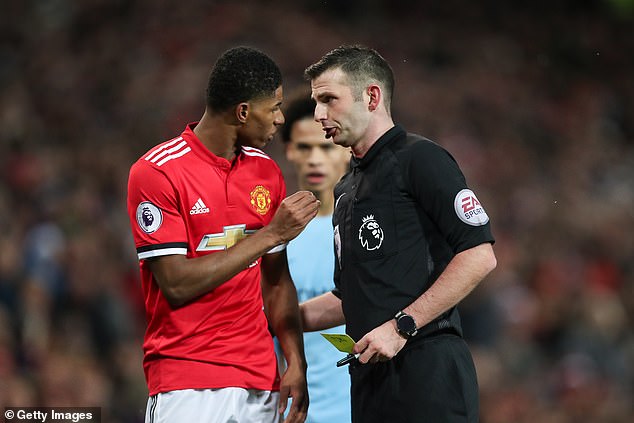
Referee Oliver said he should have focused more on Pickford's tackle

Michael Oliver loves his job, he says. He loves working with the best footballers in the best league in the best stadiums in front of the best fans. He loves football, basically. And in turn, the game should count itself fortunate it can rely on people like him. He refuses to dwell on occasions he has been targeted, like the time three years ago when he awarded Real Madrid a last-minute penalty in the second leg of a tie against Juventus in the Champions League. It was an obvious penalty and a straightforward decision but that did not stop Oliver being vilified by Juventus goalkeeper Gianluigi Buffon and sections of the Italian media. Abuse quickly followed. Oliver’s wife, Lucy, also a referee, had a Twitter presence so much of the anger was directed through her. ‘Go do the dishes, we kill your husband,’ had a light touch compared with some of the other messages. ‘You have to die,’ another informed her, ‘and that piece of s*** your husband.’ Some dispensed with the pleasantries. ‘Man of s*** must die,’ one read. To add to the fun, someone screamed abuse through the letterbox of their home. It was an extreme example but being a referee is never easy. From the outside, it is thankless. It is always his or her fault. 
Some thought that the introduction of VAR would change that and that controversy would disappear. ‘I know VAR has become an obsession,’ says Oliver, ‘but I am for it. There is all the clamour about it changing the game. But if you scrapped it tomorrow lunchtime, all you would hear all weekend would be people shouting “that would be a pen with VAR”. As soon as you moved it away, people would want it back. Ultimately, even with VAR, it’s still my decision. I’m the one who makes the decision on the field. And if I get it right first time around, there is no reason for VAR to get involved. Now that I can go and watch on a pitch side monitor, you’ve got a second chance, too. You can change your mind or stick with it. As a referee now, you should never be driving away from the ground dreading watching Match of the Day on a Saturday night or dreading Sunday morning stuff on Sky. That can only be a benefit. I have had games in the past, before VAR, where you are driving home and you are the only person in the ground who thought it was a pen and when you found that out, it was too late. Now you have got the technology to figure it out. We have the debate about “clear and obvious” but I don’t know how you get to a place where everybody is going to be happy with it. It’s all still subjective. It’s still somebody’s opinion. You make the decision on the field and somebody then has the chance to look at it again but when we sit and discuss clips weekly on Zoom you put 16 of us in a room and we are split 8-8 or 9-7 or 10-6. I think VAR’s helped the game. You are getting more fair decisions. You are getting the acceptance of players. If you go across to the monitor, there is more of an acceptance on-field because players are happy that at least two people have seen it. You have seen it live, someone else has seen pictures. There is not as much holding in the penalty area as there was three or four years ago, for instance, because people are conscious it’s more likely to get spotted and that can only be a good thing. There should be a cleaner game. The teams that score a winner with an offside goal in the last minute no longer do. It’s helped with the abuse we get, too. Players are not complaining persistently about decisions that happened 20 minutes ago. They are happy it’s been spotted, happy it’s been checked. They say what they think and then the world moves on. You look at the infamous Andy D’Urso clip of 20 years ago [when Roy Keane led a group of Manchester United players screaming in the referee’s face]. I have not seen that type of reaction for years.’ 
Referees still get things wrong. That is one of the inconveniences that comes with being human. Oliver doesn’t duck that, either. He says he has watched over and over again the incident in the Merseyside derby earlier this season where Liverpool captain Virgil van Dijk suffered a serious knee injury in a collision with Everton goalkeeper Jordan Pickford. Oliver and the other officials became distracted by a tight offside decision and allowed Pickford to go unpunished. It was a mistake. Oliver acknowledges now that Pickford should have been sent off. Although that would not have altered the seriousness of the injury Van Dijk suffered, it would have eased the seething sense of injustice many Liverpool fans harboured over the incident. That humility and conscientiousness are two of the reasons why many consider Oliver to be our best referee. His style is a long way away from the showmanship of predecessors like Graham Poll, who seemed to want to be friends of the players and thought they were part of the show, too. Oliver says people have told him he is ‘politely aloof’. Which is exactly what a referee should be. ‘Every referee is different,’ he says. ‘Everyone has got their own style. I keep being told I am politely aloof. You have that distance between you and the players but you are willing to engage. This is my 11th season in the Prem so everybody knows you and you know everybody. I have got Marine-Spurs on Sunday and I would find it strange shouting ‘No 10’ towards Harry Kane. Everybody knows who he is and I have refereed him a lot over the years. So why not call him “Harry”? And he’ll call me “Michael”. Because you have been around for so long and you have reffed them seven or eight times a season, you end up having a relationship with them. Because you see them that often. It is professional and you understand where the line is drawn but you have almost got to get on. I don’t think there is a danger of favouritism. If you see a challenge during the game and you blow your whistle for a foul, you don’t think “I’ll give that because it’s Harry Maguire or Kevin de Bruyne". You genuinely don’t have the time to think about what you’re doing. It’s a reaction. It’s something you’ve done thousands of times. You are aware of characteristics of players and I think you should be. You need to be aware of styles of play. When Stoke were in the Prem, Stoke didn’t want you to play advantage. They wanted a free-kick. Because that was their style of play. That would benefit them. You needed to be aware of that to be able to referee the game better for your benefit because if you did things that weren’t beneficial for that team, you would cause yourself some problems. You don’t prejudge but you are aware because it is your job to be aware.’ 
Offside, and the way of measuring it, has become another battle in which referees get caught in the crossfire. Fans seem unable to cope with the concept that you are either offside or you are not. Contempt is aimed at officials if a player is marginally offside. Referees, again, are accused of being jobsworths killing the game. ‘I don’t know what the alternative is,’ says Oliver. ‘There is this new phrase where people talk about an “armpit offside” but you’re either off or you’re on. It’s factual. At least where we are now, whether you like it or you don’t, it is consistent across the board. So it’s the same for all 20 teams, it’s the same for all 19 refs and it’s the same technology that’s used in every single match throughout the league. What do we do? Say that it’s OK if you’re only offside by your big toe but not if it’s by your whole foot? If you bring in a 10cm tolerance, what happens when it’s 11cm? In the past, there might have been discussion about an assistant not being quite in line but now we have all the cameras and we can move them for the point of the contact and a different camera for a different angle to get the best position possible. Some say they don’t like what we’ve got but they don’t seem to be able to come up with anything better.’ Oliver understands the point some make about VAR robbing fans of the spontaneity of their celebrations but there is another side to that, too. ‘If a goal’s disallowed,’ he says, ‘you get the celebration of the other team. I went to Sheffield United with Newcastle as a fan in the away end last season and we thought we had had a goal disallowed. Jonjo Shelvey scored it and then there was a wait for the decision because the flag went up. It was subsequently given with VAR and that was almost a bigger celebration in the away end because you haven’t scored and then you have. Yes, you lose some spontaneity but I think 95 per cent of the goals that are given still stand. I never referee Newcastle games. We have to declare if we have an allegiance to any club or if a family member works at a club. You can’t do any match involving that team and I can’t do Sunderland, either, for obvious reasons. Because Newcastle are invariably involved in a relegation battle, when you get to March or April, it means I can’t referee anyone around them towards the bottom three. If Newcastle needed a point to survive and the team they were fighting to get above was say Villa, I couldn’t referee Villa’s game either. I wouldn’t want to. It’s not worth the hassle.’ 
The handball rule was yet another issue that caused consternation earlier in the season when penalties were regularly being given for inadvertent offences. ‘You need to adapt,’ says Oliver. ‘We had that spell early season where a lot of things were being penalised. It was consistent but the league and the players and the media and us were all of the mindset we were punishing too much so there was a reset from the Prem that everybody was on board with. So you’re aware of it and you learn to do it. If you ref Premier League on Saturday and Champions League on Wednesday, you have to ref them slightly differently. You become used to adapting. With handball, it was probably not the best way to continue so everyone got together and re-evaluated and it’s in a better place now.’ Oliver is looking forward to the Marine-Spurs game. He looks forward to all his games. He was in Newcastle’s academy system as a centre-half and briefly at Sunderland, too, before his dad, Clive, a first-class referee, suggested he do a refereeing course to earn some pocket money. Oliver never went back to playing full-time. He does it, he says, because he loves football. He would relish the opportunity to referee a World Cup final but knows there are too many things that are out of his control - the possibility of England doing well in the tournament is one - to make it a defining goal. Pressure is not really something that affects him. And he is too generous a spirit to be affected by the criticism that is a referee’s faithful companion. ‘You become accustomed to stick,’ he says. ‘You have to think about it rationally. I am very much aware it’s a game, particularly with what’s going on at the moment in the world. It’s not that important. It’s not the end of the world if you make a mistake you don’t want to make. I know that if I watch Newcastle, I want them to win and everyone views things through rose-tinted glasses and you want your team to win and you want your team to do well and when something goes against your team, the natural reaction is that the referee is wrong. So you have to think rationally and everyone has a reason for criticising you. People have jobs to do and matches to win and goals to score and newspaper articles to write. I try to step back from it. You have to realise that if you’re getting criticism, it’s probably for a reason. It’s not personal. It is just a game and you do your best and if you make a mistake, you learn from it and try not to make the same mistake the week after.’ 

CONMEBOL Libertadores 2020 – Semi-finals (Second Leg)

12-13 January 2021

Palmeiras – River Plate
Referee: Esteban Ostojich (URU, photo)
Assistant Referee 1: Richard Trinidad (URU)
Assistant Referee 2: Martin Soppi (URU)
Fourth Official: Gustavo Tejera (URU)
Reserve AR: Horacio Ferreiro (URU)
VAR: Nicolas Gallo (COL)
AVAR 1: John Ospina (COL)
AVAR 2: Nicolas Taran (URU)

Santos – Boca Juniors
Referee: Wilmar Roldan (COL)
Assistant Referee 1: Alexander Guzman (COL)
Assistant Referee 2: John Leon (COL)
Fourth Official: Guillermo Guerrero (ECU)
Reserve AR: Coty Carrera (PER)
VAR: Julio Bascunan (CHI)
AVAR 1: Diego Haro (PER)
AVAR 2: Christian Schiemann (CHI)

CONMEBOL Sudamericana 2020 – Semi-finals (Second Leg)

12 January 2021 
Lanus – Velez Sarsfield
Referee: Wilton Sampaio (BRA, photo)
Assistant Referee 1: Fabricio Vilarinho (BRA)
Assistant Referee 2: Bruno Pires (BRA)
Fourth Official: Bruno Arleu (BRA)
Reserve AR: Guilherme Camilo (BRA)
VAR: Raphael Claus (BRA)
AVAR 1: Rodolpho Toski (BRA)
AVAR 2: Rodrigo Correa (BRA)

16 January 2021
Defensa y Justicia – Coquimbo Unido
Referee: Andres Rojas (COL)
Assistant Referee 1: Sebastian Vela (COL)
Assistant Referee 2: Miguel Roldan (COL)
Fourth Official: Arnaldo Samaniego (PAR)
Reserve AR: John Gallego (COL)
VAR: Derlis Lopez (PAR)
AVAR 1: Jose Mendez (PAR)
AVAR 2: Eduardo Cardozo (PAR)